

Ruthie Dickenson wants you to know she likes cats.
When the 8-year-old’s mom, Carrie, told Ruthie she was being interviewed about Ruthie’s cancer journey, she asked if there was anything Ruthie wanted to share, figuring it would be related to leukemia.
Ruthie: “Make sure to tell them how much I like cats.”
That cancer is no longer top of mind for Ruthie is due, in part, to the child life specialists at Novant Health Hemby Children’s Hospital at Novant Health Presbyterian Medical Center in Charlotte. While clinicians focus on treatment, the child life staff focuses on letting kids be kids.

“Child life specialists have a unique and important role to play in our mission,” said Dr. Felipe Bautista of St. Jude Affiliate Clinic at Novant Health Hemby Children's Hospital and Ruthie’s pediatric oncologist. “They educate patients and calm their fears. They explain what’s happening not just to the patient but to their parents and siblings, too. They ease families into this new environment – the medical world, our facilities and procedures.
“When a patient is finished with treatment and no longer coming to the clinic, most won’t remember their doctor. What they remember are the child life specialists.”
They definitely had a big impact on Ruthie and her family. “We had no idea what a child life specialist was,” Carrie said. “They were amazing. It was such a gift to have partners to walk this journey with us.”
It's a new day for the treatment of childhood cancer and blood disorders
The journey begins
In late 2022, Carrie and Travis Dickenson had noticed slightly puzzling changes in their youngest daughter, then 5. Their older girls, Nataleigh and Isabella, were in fifth and seventh grades then. Ruthie had begun napping again, for instance, and her appetite was diminished. In January 2023, Travis took Ruthie to their family doctor, Dr. Joseph Mueller at Novant Health Cotswold Medical Clinic, who ordered a blood test.
“Ruthie’s white blood cell count was so high, it was uncountable,” Carrie recalled. “Dr. Mueller invited Travis into his office to talk privately and told him he suspected leukemia.”
Carrie was in the midst of her first day of graduate school – she was working toward a Master of Social Work – when Travis texted her to say she needed to meet him and Ruthie at the Hemby ER.
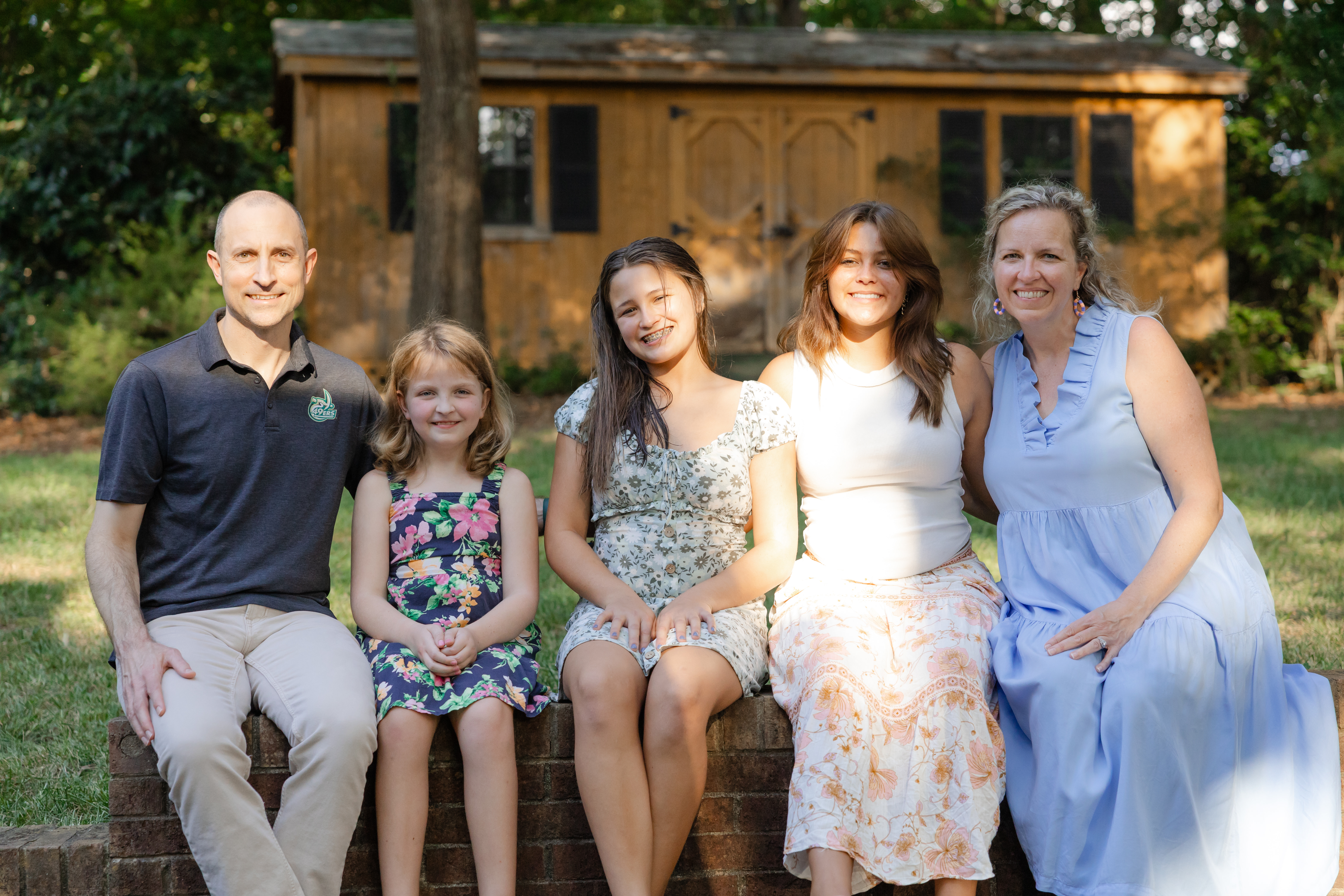
That’s where they learned Mueller’s suspicion was right. Their little girl had T-cell acute lymphoblastic leukemia (T-ALL). They met Bautista, who told them Ruthie’s cancer was treatable but that treatment would last up to two and a half years.
Soon after Ruthie was transferred to the pediatric intensive care unit (PICU), a child life specialist – Megan Arleth – came by with a stuffed doll with a patch on the chest that opened with Velcro. “Megan talked with Ruthie about leukemia and about getting a port,” Carrie said. “She showed her on the doll how they were going to give the medicine that would get rid of the bad blood cells.”
Ruthie asked, “Can I take my stuffy into the operating room?”
She was assured she could. “They said she’d probably fall asleep before she even got into the OR and that her stuffed animal would be with her the whole time,” Carrie said. “They helped keep her relaxed, which helped me relax.”
Arleth and another child life specialist, Kristen Beaury, helped Ruthie’s parents know how to talk to their daughter about cancer. “They told us most kids feel less scared when they’re receiving answers,” Carrie said, “and that keeping too much from them can make them nervous.” So, Carrie and Travis told Ruthie as much as a 5-year-old could understand.
Aggressive treatment
Chemotherapy (chemo) is the standard treatment for kids with T-ALL; there’s typically no radiotherapy.
But this chemo regimen is aggressive.
And for Carrie and Travis, Ruthie’s first infusion was especially unsettling: There was a chance of a medical complication called tumor lysis syndrome due to her very high white blood cell count and significantly enlarged spleen. To reduce the risk, chemo can be slightly modified while the patient is closely monitored for the first few days.
Ruthie tolerated this round of chemo well, and the size of her spleen slowly decreased.
Most kids do well with chemo, Bautista said: “In general, children tolerate treatments much better than adults. They’re mostly worried about getting to play. They’re not overthinking things the way adults do.”
Nausea was not a major issue for Ruthie. “We try to predict and prevent complications,” Bautista said. “We give anti-nausea medications as a precaution, which decreases the possibility of nausea and vomiting quite a bit.” Her chemo infusions became almost routine. But three-and-a-half months into treatment, Ruthie experienced complications.
‘Something good out of a horrible experience’
There’s always a risk of developing an allergic reaction to chemo, and Bautista had prepared the Dickensons for that. One of the chemo drugs necessary to fight T-ALL – asparaginase – causes allergic reactions in about 10% to 20% of patients, with some developing severe anaphylaxis.
Ruthie was one of them. “She told us it was hard to breathe,” Carrie said. “Her face was swelling. But the doctors and nurses were on it. Within seconds, they pulled out that chemo line.”
Asparaginase can also be injected. But it’s not a single shot. Six shots, given every other day, are the equivalent of one IV infusion.
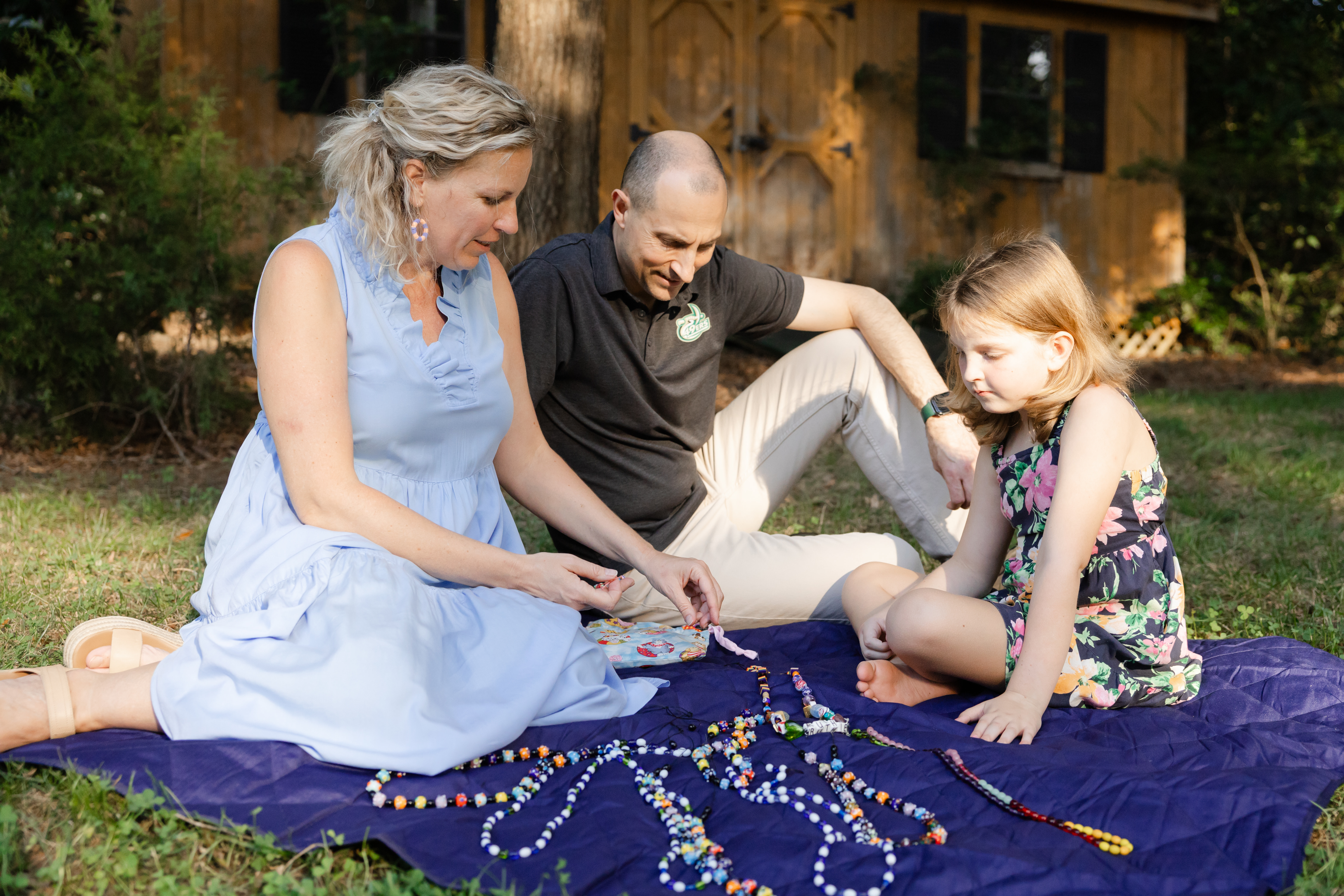
All told, Ruthie endured 36 shots over a couple of months, and all were given in her leg. That was the worst experience of the entire journey, Carrie said. Enter: The child life specialists.
“They came up with so many creative ideas to make something good out of a horrible experience,” Carrie said. “One of them – Melissa Owen – cut a circle in a cardboard box, put a Solo cup inside the circle and covered it with tissue paper and a rubber band. After every shot, Ruthie would punch the Solo cup and pull out a prize.
“She hated the shots, but she couldn't wait to get a prize,” Carrie said. “Often, it was a puzzle piece. By the end of that series of shots, there was a complete puzzle that had a special message for Ruthie to decode before she could find her big prize.”
Nurses helped, too. When the 36 shots were finally over, one nurse brought Ruthie a keychain with two charms – an elephant and one with this message: “Always remember how strong you are.”
Back to normal … but different
If Jan. 9, 2023, was the worst day the Dickensons ever faced, June 4, 2025, was the most jubilant. That was the last day of Ruthie’s treatment, and she marked the occasion by ringing the bell. Child life turned the bell ringing into a party.
Ruthie got to pick the song that played while she walked down a red carpet and was cheered on by staff, family and friends. Everyone threw confetti as Ruthie proudly walked out to Miley Cyrus’ “Party in the USA.”
She’ll be checked for signs of cancer periodically for at least five years and have follow-up visits with an oncologist at least yearly after that. “Nothing in medicine, or in life, is 100%,” Bautista said. “But most children treated for this kind of cancer will be cured.”
Ruthie considers herself a cancer survivor – something she’s proud of, Carrie said. The family attends the Blood Cancer United (formerly Leukemia and Lymphoma Society) annual “Light the Night” event, and Ruthie gets to carry a white lantern to signify her status as a survivor. She also attends Camp CARE – which stands for Cancer Ain’t Really the End – a weeklong sleepaway camp for kids who’ve had cancer.
Carrie reported an incredible postscript to this story. By happenstance, Ruthie has been in a dance class three days a week with Dr. Bautista’s daughter.
They’ve been onstage together for three public performances and will be in “The Nutcracker” again this December. “Making this personal connection with Dr. Bautista and his family has been the brightest of silver linings to this journey,” Carrie said. “Who could have orchestrated such a story?” Carrie said all four parents are thrilled to witness their “daughters literally dance through life!”
Ruthie’s back in school, and her hair is long now. But the family has been forever changed.
Faith has always been important to the Dickensons. For two decades, they’ve been members of Hope Community Church in Charlotte and attend the South End location. But their faith grew even deeper as a result of their cancer experience.
“As parents, we strive for control,” Carrie said. “And then something like this happens, and you realize how much is beyond your control. So, we’ve chosen to dive deeper into our faith. If we can't control this, we’ve got to believe in something bigger.”
Meals, laundry and carpools
What you can do for a family with a kid going through cancer treatment
The Dickensons’ friends made sure their lives were as normal as possible during a topsy-turvy couple of years.
Church friends “set up a care team for us and said, ‘Here’s who to call on a Monday for whatever you might need. Here’s who to call on a Tuesday,” Carrie said. “Every day of the week, there was somebody I could reach out to.”
“The congregation was unbelievable,” she added. “Our pastor was the first one to the hospital that day, and he stayed with us for eight hours and came back the next day.”

Beyond that, church friends “organized a meal schedule and provided, over the next eight months, 109 meals for us,” Carrie said. “They provided a cleaning service, did our laundry and helped take care of our big girls, as did the elementary school community and our neighbors. Our friends gave them countless rides. So, my big girls never missed a sports practice or a social event. It was so humbling.”
When Ruthie had to miss the second half of her kindergarten year, Carrie worked with her teacher to ensure her classmates didn’t forget about her.
She applied to a program called Monkey in My Chair and received in the mail a giant, stuffed monkey they took to Ruthie’s classroom. “The program’s premise is: Don’t forget about me,” Carrie said.
Ruthie’s classmates named it “Monkey Roo,” and the stuffed animal served as a stand-in for Ruthie while she couldn’t be at school.
When chemo caused Ruthie’s hair to fall out, she tried wearing caps, but found them too hot. “Thank God 5-year-olds don’t care much about hair,” Carrie said. “When she started first grade, I asked Ruthie if she wanted me to come talk to her class. She did, and I brought a book, “When a Kid Like Me Fights Cancer” and Ruthie and I answered kids’ questions.”
While Carrie and Travis were taking care of Ruthie, their friends were taking care of the family.
“You don't want to admit just how depleting a cancer diagnosis is,” Carrie said. “And when you receive all this help, you realize you never could’ve done it alone. We can say we believe in God, but when you see people who share your faith caring for your family in ways you didn’t even know you needed, your faith becomes tangible.”


