

If you’ve ever wondered whether severe period pain is normal, experts say the answer is no. Yet millions of women with painful, heavy periods spend years being told to “just deal with it.” Conditions like dysmenorrhea — the medical term for painful menstruation — are common, but they are also frequently underdiagnosed and undertreated.
For many women, symptoms like pelvic pain, extreme cramping, bloating and heavy bleeding can disrupt work, relationships, sleep and daily life for years before they receive real answers. Treatments can range from birth control and medication to procedures such as endometrial ablation and hysterectomy for women with severe, persistent symptoms.
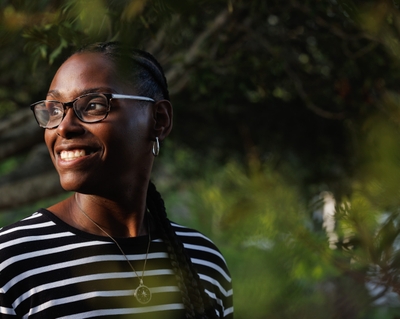
Kashinda Carter spent nearly 20 years searching for that kind of relief. From the time she got her first period at age 15, the High Point healthcare worker endured debilitating cramps, chronic pelvic pain and bleeding so severe she planned her entire life around her cycle.

Over nearly two decades, doctor after doctor dismissed her symptoms as something women simply had to tolerate. An endometrial ablation brought temporary relief, but when the pain returned, Carter ultimately chose to undergo a hysterectomy.
It was Dr. Erica Horn, an ob-gyn with Novant Health City Lake OB/GYN - Thomasville, who finally listened — and helped change her life.
This is Carter’s story in her own words.
Get the women's health care you deserve.
Your periods were heavy and painful from your very first one, right?
I would always know my period was coming because of the pain and bloating. For seven years, they were very erratic. I once went 18 months without one.
As I got older, the pain became more constant — not just before and during my period, but kind of the daily background noise of my life. It was low-grade pelvic pain that got worse during my period: That was just life. I went to doctors and got a variety of diagnoses, a variety of medications. None of it helped.
Doctors — some men, some women — would treat my symptoms. Birth control pills were supposed to help with the heavy bleeding, but they did nothing for the cramping and swelling. All the bleeding was making me anemic.
Every doctor had a different answer. Sometimes the answer was, “Oh, your body’s just weird like that.”
Help people understand how bad the period bleeding was.
I kept a period tracker and planned my whole life around my period. I didn’t want to ruin vacations and events by having my period.
I had to always have protection on me, just in case it started abruptly or was heavier than expected. I wore nighttime maxi-pads during the day. They’re basically like diapers. I was working 12-hour shifts in home healthcare, and it wasn’t always easy to duck into a restroom to change my pad.
Did you take anything for period pain?
I took every over-the-counter remedy for menstrual pain on the market. Nothing would help. Even prescription medication would barely take the edge off. Finally, I just stopped taking anything because it was just a waste of money.
Did you ever get an official diagnosis?
I got a bunch of diagnoses based on whatever the major symptom at the time was. If I was having really heavy periods, the diagnosis might be dysmenorrhea. During the times I wasn’t having a period, the diagnosis was amenorrhea. (That’s the medical term for the absence of menstruation.)
Tell me about what you heard from doctors about your period pain and bleeding.
My concerns were often met with a shrug. A lot of doctors acted like: It’s just pelvic pain; it’s not life-threatening.
One doctor told me, “That’s just life with a uterus.” It was so disheartening; I felt like it was never going to get better.
This happened over the course of many years, and the response was similar no matter where I lived.
In Ohio, we decided we were ready to have a baby. I’d been told I could have a very hard time getting pregnant and may need to see a reproductive specialist. We were shocked when we got pregnant the first month we tried.
One of the best parts of being pregnant was not having these horrible periods. But after I had my daughter — she’s now 6 — my bad periods came rip-roaring back, and they were more aggressive than before.
My OB in Ohio told me that these kinds of periods aren’t normal and that I didn’t have to live this way. I almost burst into tears in her office because I was so relieved. She told me, “Being a woman does not mean you have to suffer until the mercy of menopause finally takes it away.”
She prescribed a medication and told me to try it for a couple of weeks. If it didn’t help, she said we’d try an ablation. (Ablation is the removal or destruction of body tissue, usually via minimally invasive surgery. There are several types of ablations for different conditions, including a cardiac ablation used for irregular heartbeats. Carter had an endometrial ablation that intentionally destroyed her uterine lining, what the body sheds during a period, to reduce her cramps and bleeding.)
Had anyone ever mentioned an endometrial ablation to you before?
No. And that doctor asked if I was sure I didn’t want more kids because I wouldn’t be able to have them after the procedure. My husband and I were sure; we were the one-and-done kind of parents.
But the ablation didn’t work?
It did — for a while, anyway. It was incredible; it made everything — the heavy bleeding, the cramping — stop. I had never had this kind of peace aside from when I was pregnant.
But my Ohio OB had warned me the results may not hold forever. She said if my symptoms came back, my only option was a hysterectomy. The ablation held for two years. When the painful periods came back, we were living in High Point.
And you found Dr. Horn.
I can’t remember who referred me, but yes. I’m grateful to whomever it was. I met with her physician assistant first and told her my whole story.
And I was ready for Dr. Horn to push back on my desire for a hysterectomy. I was so used to being told to just deal with the pain. Most doctors acted like the idea of a hysterectomy had just occurred to me on the way to their office.
The usual response was, “But you might want more children” or “Nobody has a hysterectomy in their 30s unless they have cancer” or “What if your husband wants more kids?”
One doctor I saw when I was in my 20s and single said my future husband might be upset by my hysterectomy. I was like: We don’t need to consider what a theoretical man may or may not want.
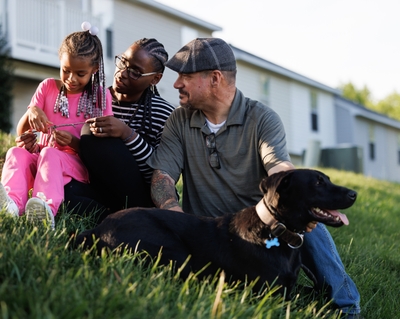
When Dr. Horn came walking in, she said, “I heard you wish to be rid of your uterus.” I busted out laughing and said, “Yes, if that's possible.” She said, “Absolutely, it is.” That was one of the most liberating moments of my entire life.
She never doubted me or tried to talk me out of it. She told me what to expect from surgery and said, “If you’re sure, then I'm sure.”
Dr. Horn understood me immediately, which made me immediately comfortable. It was so nice to connect with someone who looks like you and has a similar understanding of how you move through the world as a Black woman.
I especially appreciated how careful Dr. Horn was. I had had abdominal surgery for a huge hernia, and she was concerned that there could be a lot of scar tissue or adhesions that could make robotic surgery more difficult. She said she wanted another surgeon in the OR with us just to be safe. She ended up not needing him, but I was very appreciative she took that step.
When did you have the hysterectomy?
Surgery close to home
Kashinda Carter didn’t have to go far from home for surgery.
Highly skilled surgeons are operating at Novant Health Thomasville Medical Center. That’s where Dr. Erica Horn, with the assistance of a robot, performed Carter’s hysterectomy and finally put an end to years of pain.
Carter shared her gratitude: “The staff at Thomasville Medical Center are top tier, fantastic ... some of the nicest, most caring, professional people I've ever had the pleasure to deal with. Everyone was wonderful and made me and my husband at ease. They could not have been more outstanding."
Last Halloween — Oct. 31, 2025 — at Thomasville Medical Center. I went home the same day and had a flawless recovery. For the first time since I was 15, I was not in constant pelvic pain. I wish I’d done it years ago.
How different is life now, after your hysterectomy?
I told my husband I didn’t know it could be like this. I didn’t think I would ever wake up and not be in pain or go to sleep and not be in pain.
I didn't realize how much mental energy I was extending just managing my periods until I didn’t have to do it anymore.
What’s your message to other women who are suffering with painful periods and heavy bleeding?
You don’t have to spend your life in pain, and you don't have to be 65 to have a hysterectomy. Dr. Horn didn’t look at my age as a disqualifier. She told me: It’s not necessary for you to suffer. There is a way out.
Keep looking until you find a physician who listens to you.
Dr. Horn’s perspective: ‘Who can discern another person’s pain?’
When Kashinda Carter told Dr. Erica Horn about a lifetime of pain dismissed by the medical community, it wasn’t the first time she’d heard that story.
She’s known other Black women — and especially young Black women — who find the U.S. healthcare system too easily writes off their concerns. One African American woman, whose story horrified Horn and many others, couldn’t get anyone to take her symptoms seriously. She died of COVID two weeks after she posted a video from her hospital bed about her doctor telling her, “You’re not even short of breath.”
And that woman, Dr. Susan Moore, was a physician herself.
Horn doesn’t want to be one more in a long line of dismissive doctors. “Who can discern another person’s pain?” she asked. She didn’t ask Carter to prove her pain was real or lecture her about being too young for a hysterectomy. (And they’re not unheard of for women in their 30s, Horn said.)
Hysterectomies have gone, in the past 20 years or so, from open abdominal procedures to primarily minimally invasive (laparoscopic and robotic) procedures. Incisions are smaller, hospital stays are shorter, recovery times are faster. “We like for patients to get up and around for a bit the night of their surgery,” Horn said.
Patients should be off any pain medicine within two weeks. Beyond that, there are lifting restrictions and a suggestion to refrain from intercourse for three months.
Horn has been thrilled to see Carter’s zest for life now that she’s free from period pain. She said, “Rarely does a physician get to enjoy having such a positive impact on someone’s day-to-day existence.”
FAQs
Mild cramping during menstruation is common, but severe pain that disrupts work, school, sleep or daily life is not considered normal. Conditions such as dysmenorrhea, endometriosis, fibroids or adenomyosis can cause debilitating pelvic pain and heavy bleeding. You can make an appointment with a Novant Health ob-gyn to discuss your options for care if you are experiencing periods that disrupt your life.
Dysmenorrhea is the medical term for painful menstrual cramps. Some women experience primary dysmenorrhea, which is pain caused by uterine contractions during periods, while others have secondary dysmenorrhea caused by underlying conditions such as endometriosis or fibroids.
Pregnancy after an endometrial ablation is uncommon and can be dangerous. Because of that, the procedure is typically recommended only for women who are sure they do not want future pregnancies.
A hysterectomy — surgery to remove the uterus — may be considered when severe pelvic pain, heavy bleeding or other symptoms do not improve with medication or less invasive treatments. The decision depends on a patient’s symptoms, overall health and future fertility goals.


