

If you’ve always fasted before your yearly physical but haven’t been told to in recent years, it doesn’t necessarily mean your doctor forgot to mention it. They may have deemed fasting unnecessary.
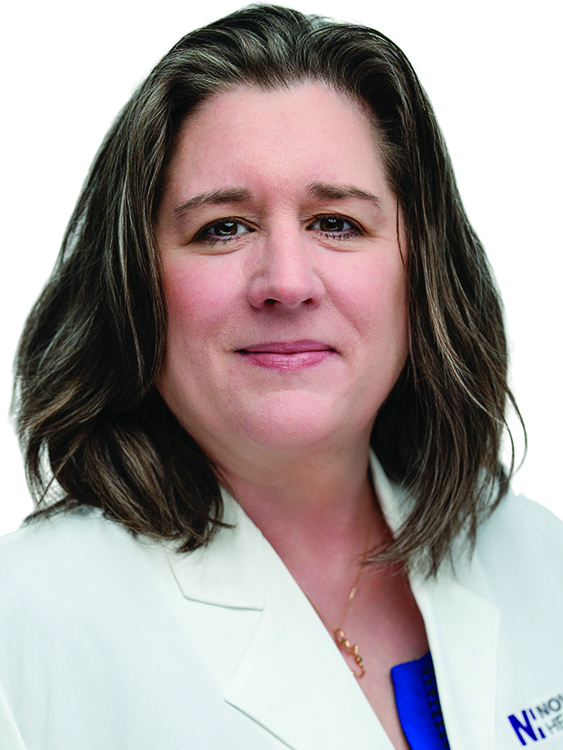
“It used to be standard that everybody needed to fast before a physical,” said Dr. Karen Henrichsen, an internal medicine doctor with Novant Health Buckwalter Place Primary Care in Bluffton, South Carolina. “But that's not the case anymore. Our tests are becoming more sensitive and specific, so fasting isn’t always necessary. But much of that depends on your age.”
The idea behind fasting is that it helps make sure your bloodwork results are accurate and not affected by what you’ve recently eaten or drunk. When you eat, your body starts digesting food right away. This can temporarily change things like your blood sugar and fats in your blood. By not eating for several hours, your body returns to a “baseline” state. But while fasting can improve the accuracy of some bloodwork results, it isn’t always the safest or most appropriate choice for every patient.
Henrichsen specializes in geriatric medicine, so many of her patients are in their 60s and older. “I tell many of my patients not to fast because of the chronic health conditions many of them have,” she said. “Fasting may not be safe for them, and I know when I'm looking at their labs that if their blood sugar is mildly elevated, it’s because they ate breakfast, and I'm not concerned.”
Henrichsen outlined when and why you might need to fast — or not — before a physical and shared some other pointers, too.
Good health starts with a checkup.
Do all doctors require you to fast before a checkup?
The medical community isn’t entirely in agreement on fasting before a physical.
“Some physicians say fasting doesn’t matter,” Henrichsen said. “They say you should be able to take a cholesterol test whether or not you’ve eaten anything first because an ‘anytime’ reading is more accurate.”
Doctors who don’t recommend it argue that fasting may not paint a true picture. If you’re eating a mostly high-fat, high-cholesterol diet, they want to know. And they say that eating your normal breakfast before a blood draw will tell the full story.
Doctors who advocate for fasting say it provides a consistent baseline, which helps them compare results from year to year.
Neither way is wrong; it all comes down to personal preference. “The important thing is to check with your doctor’s office in advance,” Henrichsen said. “Don’t assume you shouldn’t fast if nothing was said to you. Call your doctor’s office the day before your appointment if you haven’t heard from them.”
Why you might be asked to fast before you receive bloodwork
There are two tests that could be skewed if you eat before having blood drawn, Henrichsen said.- One is a glucose, or blood sugar, test. Depending on your age group and other factors, your glucose should be screened annually.
- The other is a cholesterol, or lipid, test — a test with three components to it, only one of which requires fasting. That’s triglycerides, which are affected by sugar. Cholesterol generally gets screened once every five years, if your last cholesterol test was normal. If you’re not having a cholesterol screening, there may be no reason for you to fast.
What exactly is fasting?
Fasting means no food or beverages other than water for eight to 12 hours before your physical.
“Not even black coffee is permitted,” Henrichsen said. “Because even black coffee can affect those tests. And no chewing gum or mints, either. They can have sugar.” Henrichsen said to play it safe, you should avoid even sugar-free gum and mints.
Drink plenty of water if you have to fast
Fasting before a physical should involve drinking lots of water. You want to be well-hydrated so it’s easier to draw blood.
“Some patients have told me this part is hard for them because they don’t like water. But if you’re dehydrated when you go to the lab, it's harder for us to draw your blood,” Henrichsen said. “And if you’re someone who doesn’t like to have blood taken, you’ll be glad you made yourself drink plenty of water when it only takes a single needle stick to get blood.”
Because a urinalysis may be part of your physical, being well-hydrated makes that easier, too.
A urinalysis is used most often to screen for kidney disease. Early signs of diabetes can sometimes be seen in the kidneys.
What does standard bloodwork include?
The standard bloodwork a reasonably healthy adult can expect at a physical changes slightly as we age, but in general, your doctor will request:- A CBC (complete blood count), which screens for anemia and other abnormalities in your red and white blood cells.
- A BMP (basic metabolic panel), which checks your electrolytes and your kidneys. (Electrolytes are the essential minerals, including potassium, calcium and magnesium, that are crucial for hydration, regulating nerve and muscle function, controlling blood pressure and more.)
“If you’re on certain medications, your doctor will most likely change that BMP to a CMP (comprehensive metabolic panel), which includes a liver screening, too,” said Henrichsen.
What your doctor is looking for in bloodwork
Thyroid abnormalities are a key thing your doctor is looking for. The thyroid regulates metabolism, energy level and cardiovascular health, so an overactive or underactive thyroid can lead to fatigue and changes in weight and mood.
Annual physicals become more crucial with age
Aging impacts every system of the body, obviously. The older we get, the more important our annual physical becomes.
“As women get older, we don’t get that burning sensation or the frequency and urgency that accompany urinary tract infections when we’re younger,” Henrichsen said. “UTIs are often asymptomatic in older adults. And they can be very serious. They can lead to confusion and delirium, which can be misdiagnosed as dementia. So, a urinalysis becomes really critical for seniors.”
It's worth repeating: Ask your doctor if you need to fast before your checkup
Whether or not you need to fast before a physical is determined by several factors, including your age, the medication you’re on and your doctor’s preference. Always ask when you make your appointment what you need to do to prepare.
If you’re told to fast, be sure to ask if you can take the medications you normally take in the morning.
“Most likely, the answer is yes,” Henrichsen said. “However, people who might be on insulin may have to wait until they can eat breakfast. Always check with your doctor.”


