

Sorry, fish: Hank Cherry is back.
Hank's one of the biggest names in bass fishing — but just a few years after winning the world’s most prestigious bass fishing tournament in back-to-back years, his arm hurt so badly he couldn’t even hold his rod.
He thought his career as a professional angler was over.
Instead, Hank kicked off 2026 by winning a major tournament on his 52nd birthday. He’ll end the year competing for the largest purse in bass fishing history.
Here’s how surgery — and determination — got Hank back on the water.
The dream begins
When Hank’s dad, Harold Cherry Sr., took a young Hank fishing for the first time, he “created a monster,” as Hank likes to say.
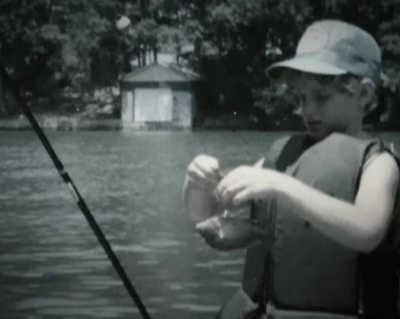
A “country boy raised in the city,” Hank didn’t grow up on a lake — but he’d bike to the 7-acre lake at Charlotte’s urban Freedom Park to catch what he could. He lived for trips with his dad to Lake Wylie, and battled his sisters each Sunday to watch fishing shows and tournaments on the family’s television.
At age 7, Hank decided he’d be a professional bass fisherman when he grew up. When people told him it was unrealistic, “that fire just burned hotter,” Hank said.
Hank’s wife Jaclyn Cherry smiles thinking about it.
“I know the competitive nature in him now, and can only imagine that immature kid going, ‘I'm gonna do that someday, and all y’all watch out,’” Jaclyn said. “He's very unstoppable when he puts his mind to something.”
This determination would become an essential part of his success.
Expert orthopedic care that combines leading-edge technology with ease and convenience.
The dream’s alive
As Hank grew, his goal did too: He decided to win the most prestigious bass fishing tournament in the world — the Bassmaster Classic. Getting there would require much more than just fun on the water.
Hank would need to become an expert on how bass act in different seasons, water temperatures, and weather and lake conditions — and how to instantly adapt his approach when conditions change. He’d need to master strategy and time management on the water, and the business of professional angling off the water. And he’d need to win at lower divisions before he’d ever make it into the top tournaments.
As a multi-sport athlete who played baseball in college and almost went professional, Hank was used to working hard and making sacrifices. But the challenges mounted.
While elite professional anglers can live off tournament winnings and sponsorships, getting to that level requires money — lots of it. An entry-level tournament boat costs $50,000 to $70,000, and that’s not counting the truck to haul it, all the fishing equipment, or the thousands of dollars of entry fees per tournament.
Hank’s full-time job as a wine distributor helped him get started in the Fishing League Worldwide Tour.
But in 2008, Hank lost his job after a corporate buyout, putting him and Jaclyn into financial crisis.
Hank couldn’t let down his family — which by now included a son, Christian. He sold his bass boat, quit fishing tournaments, and figured his dream was done.
About those fish
Wondering what happens to the fish that get caught? The largest are kept in a well on the angler’s boat and after being weighed are returned to the lake whenever possible. Anglers get penalized for dead fish, so there is an incentive to keep them alive.
Two years later, a friend invited him to ride along for a tournament on Lake Norman where — like something out of a movie — Hank hooked the biggest bass.
The prize? A new high-performance bass boat.
The message was undeniable: Keep dreaming.
But after two seasons, Hank wasn’t at the top yet — so in 2012, the Lincolnton resident made a commitment: He’d spend one more year trying to become a professional angler, and call it quits if he didn’t succeed.
It was now or never.
Turns out, it was now: That year, Hank qualified for the Bassmaster Elite Series — the highest level of professional bass fishing tournaments — and earned a spot in the Bassmaster Classic, where he won third place.
He ended the season winning the 2013 Rookie of the Year award. (Although his greatest win of the season was the birth of a healthy daughter, Bella Grace.)
His success finally allowed him to go pro. But the third-place finish ate at him — he knew he could win.
And in 2020, he did just that: With Jaclyn and his two children by his side and confetti raining down, Hank held up the most-coveted trophy in bass fishing. He had won the Bassmaster Classic.
Then Hank repeated the win in 2021 — one of only four anglers in history to win the Bassmaster Classic back-to-back.
The dream’s threatened
But being a professional angler is brutal on the body.
In the days before a tournament, Hank practices 8 to 12 hours a day. In 2026, his competitive season is 10 months long, with 17 tournaments — each lasting three to four days that begin at sunrise.
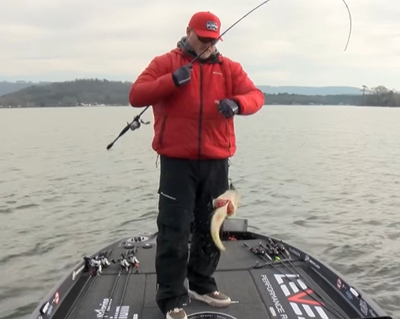
Hank is best known for jerkbait fishing — an active technique that combines a jerking, whipping, or pulling movement with enough pauses to convince a bass that a lure is actually a dying fish. On a normal day on the water, “casting a jerkbait is like throwing a baseball or football 5,000 or 6,000 times a day,” Hank said.
Hank’s also known as the “cold water guru” of bass fishing, a title he’s earned with his off-season dedication: “When the majority of the field is at home, snowed in, or freezing in a tree trying to kill a deer, I'm in the lake,” Hank said.
It’s made him great. But this kind of commitment takes a toll.
Hank knew of at least five anglers that had developed a repetitive strain injury called angler’s elbow — also known as tennis elbow or lateral epicondylitis.
In 2023, it was his turn.
At first, Hank felt “awkwardness” in his right elbow, which lasted about a year. Then holding his rod became too painful — so Hank started fishing with left-handed reels and holding his rod in his left hand. Eventually, his elbow hurt all the time.
He tried stretching, ice, wearing a compression arm sleeve, and steroid injections — which helped temporarily. But when the injections wore off, the pain and numbness got worse. “Every time I would have a hook set, I was like, ‘Okay, this is gonna hurt,’” Hank said. “It just weighs on you mentally.”
His performance began to decline — by Hank’s standards, anyway: “I didn’t win any when all this was going on,” Hank said. “I was just happy to get through the first two days and make it to the third day.”
Worst of all, it was affecting his love for the sport.
“It seemed like I was in a bad mood every time I went fishing,” Hank said. “I was like, hold on a minute — this is what I’ve always wanted to do. This is my dream, and now I’m upset when I got to go?”
The dream — on hold

So in 2024, Jaclyn called a time-out and consulted with family medicine doctor, trusted friend, and Novant Health senior vice president, Dr. C.J. Atkinson. He sent them to an orthopedic surgeon — Dr. Brandon Valentine of Novant Health Orthopedics & Sports Medicine - Cotswold.
The stakes were high.
If Hank couldn’t fish, he’d lose sponsors, his livelihood, and his dream.
So Hank laid it out: “I need the most concrete answer to this problem. I don’t need any maybes.”
When Valentine recommended surgery, Hank felt good about the plan — but before committing, he waited for Jaclyn’s reaction.
“Hank’s the breadwinner — I have to relinquish his hands and his arm to someone, and people don't understand what that is to our family,” Jaclyn said. But Valentine’s confidence was contagious: “He was very direct: ‘I think we can knock this out of the park.’”
Jaclyn gave the nod.
Hank scheduled the surgery for the off-season so he could rehab in time for the 2025 season. “Taking a medical hardship is not really in my DNA,” Hank said.
And in October 2024, Valentine performed a lateral epicondylitis debridement and repair on Hank. In layman’s terms, that means he made a cut near the outside of the elbow, removed the damaged tissue that was causing pain, then repaired and reattached the tendon to help it heal back onto the bone more securely.
The procedure has an 85% to 90% success rate. It worked like a charm for Hank.
After surgery, Hank was in a splint for two weeks, with strict orders from Valentine to lift nothing heavier than a cup of coffee. After six weeks, Hank was cleared to start stretching exercises — then physical therapy, which Hank approached like a full-time job.
Physical therapy was uncomfortable at times, but never painful. “I’ve had zero pain since my elbow surgery,” he said.
If he had to complain about anything, it was spending the winter indoors. “He was miserable,” Jaclyn laughs. “You were so ready for Dr. Valentine to say, ‘Go cast.’”
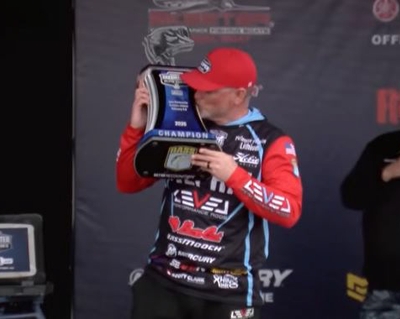
In February 2025, Hank fished in his first tournament after surgery.
“I was still unsure. Everything felt a little different,” Hank said. “It took several times to begin to trust everything that was going on.”
But fishing without pain was a welcome sensation.
“I kept thinking, ‘Oh God, this is gonna hurt,’ because that's what I used to think the year prior,” Hank said. “But once I got past that hump — kind of like a race car driver that's been in a wreck and has to drive around the track and get back there — everything was good.”
He’d spend 2025 rebuilding — but he was grateful for the opportunity to do so.
“Dr. Valentine gave us peace of mind and did a great job,” Hank said. “Thank you isn't enough, and it isn't the most creative words, but at this point in time that's the most meaningful two words you could say.”
The dream continues.
In February 2026, one year after his return to fishing, Hank won the first tournament of the Bassmaster Elite tour at Lake Guntersville in Scottsboro, Alabama.
But the real win? He was having fun fishing again.
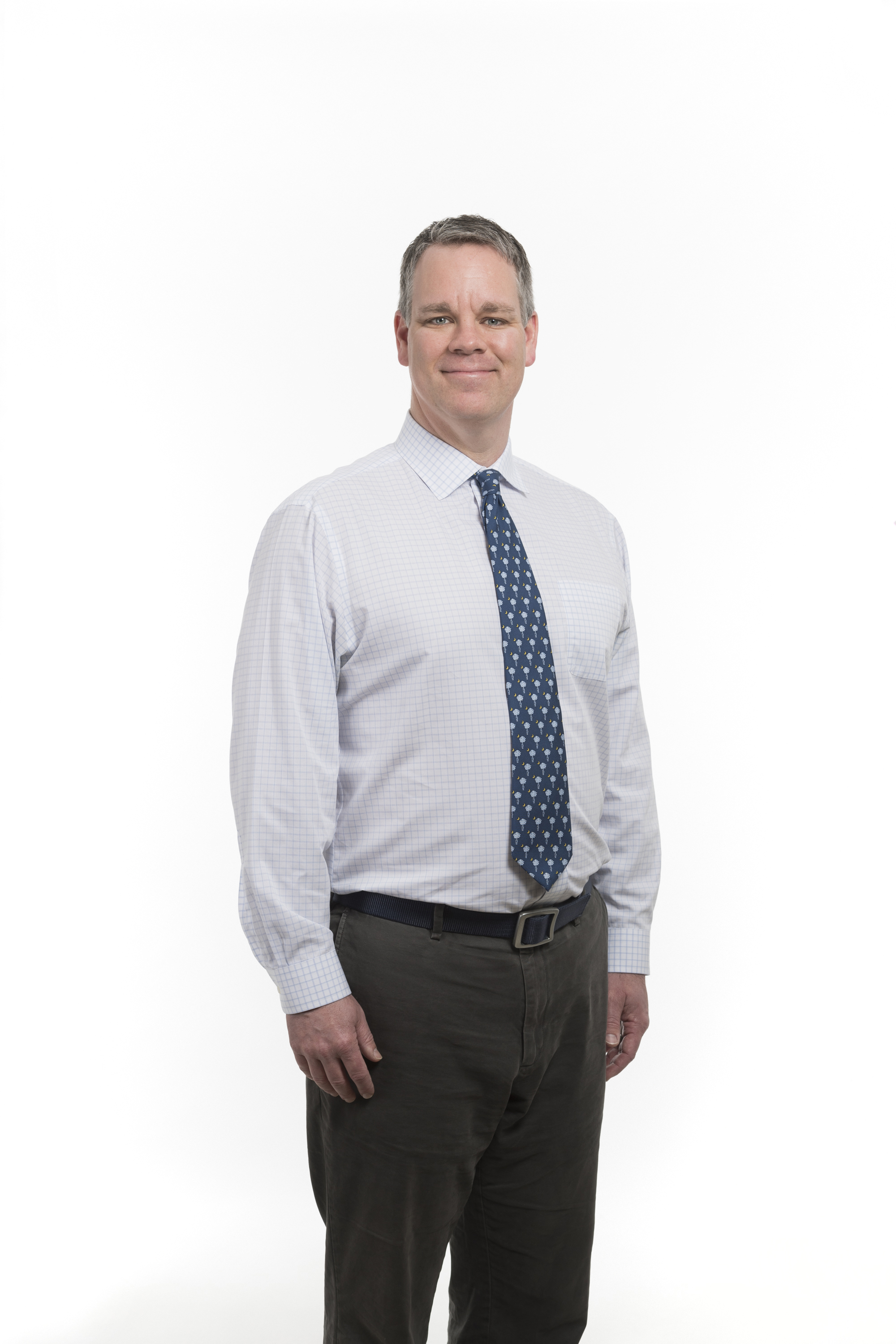
This orthopedic surgeon’s also living his dream.
Dr. Brandon Valentine of Novant Health Orthopedics & Sports Medicine - Cotswold likes fixing things. It’s what drew him to orthopedic surgery.
“I like that there are definable concrete problems that you can try to improve and actually see the results,” Valentine said. “I like getting people back on the field or to the activity that they enjoy.”
He’s operated on numerous professional athletes before performing Hank Cherry’s lateral epicondylitis debridement and repair.
The pressure he feels to perform a good surgery is equal matter whether a patient is famous or not.
But a professional athlete’s margin for error is much smaller — “If they’re 10% off their previous self, it’s much more noticeable.”
Valentine said a successful recovery is shared 50-50 between the surgeon and patient: “I can do what I can surgically with the knife and making the tissue as good as it, but you putting in the work and time on the back end contributes a lot to how positive the outcome is.”
Hank was a model patient, Valentine said, who put his all into recovery.
And now? “I hope he can keep fishing for as long as he wants, keep winning tournaments, and keep following his dreams."
FAQs about tennis elbow, also known as angler's elbow
Tennis elbow is a painful condition caused by overusing your arm and elbow. It usually happens when you repeat the same motions over and over, such as gripping, lifting, or twisting. You will typically feel the ache right on the outside of your elbow. Despite its name, you do not have to play tennis to get it. Anyone who uses their arm a lot for work or daily activities can develop this kind of elbow pain.
The most common sign is pain or aching on the outside of your elbow. You might also notice that your grip feels weaker than usual. This can make everyday tasks uncomfortable or painful, especially when you try to lift things, shake hands, turn a doorknob, or hold onto basic objects like a coffee cup.
Most of the time, tennis elbow gets better on its own without needing surgery. The first and most important step is to rest your arm and stop doing the activities that cause you pain. You can apply ice to the sore area and take standard over-the-counter pain relievers to feel more comfortable.
Your doctor might also suggest wearing a simple brace to take pressure off your elbow while it recovers. Doing gentle stretches or working with a physical therapist can help you rebuild your strength and improve your flexibility. More than anything, the best treatment is simply giving your arm plenty of time to fully heal.
Surgery is usually considered a last resort. Your doctor might suggest an operation if your elbow pain does not get better after trying other treatments for several months. If you have rested, completed physical therapy, and given your arm plenty of time to heal, but the ache still makes it hard to do your job or enjoy your daily routines, surgery might be the right next step. The goal of the procedure is simply to fix the damaged area so you can use your arm comfortably again. Click here to find an orthopedic specialist who can help you determine if you are a good candidate for surgery.
Healing from tennis elbow surgery takes time, but most people see steady progress. Right after your operation, you will need to rest your arm so the area can properly heal. After a short break, you will start doing simple exercises or working with a physical therapist. Moving your arm again helps you rebuild your strength and get your full range of motion back. You can expect to improve gradually over several weeks to a few months. Your care team will let you know exactly when it is safe to return to your normal daily routine.


