

If you suffer from occasional aches and pains – and who doesn’t? – and see a primary care doctor, physical therapist, acupuncturist and/or chiropractor, you should know about osteopathic doctors, otherwise known as DOs.
One DO may be able to do what all four of the above providers do.
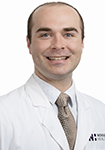
They make up about 11% of all physicians in the U.S., according to the American Osteopathic Association. But their numbers are growing. A fourth to a third of current medical students are training to be DOs, said Dr. Elexander Atkinson of Novant Health Midtown Family Medicine in Charlotte. He’s one himself.
The DO philosophy is rooted in caring for the whole person – mind, body and spirit. Atkinson is fond of quoting osteopathic medicine’s founder, Dr. Andrew Taylor Still (1828-1917), who said, “The object of a doctor is not to find disease – any fool can do that. It’s to find health.”
If you’ve never heard of DOs, you’re in good company. Atkinson hadn’t either. But in college, he shadowed a DO and saw how he interacted with patients. He liked the holistic philosophy and decided that was the field for him.
DOs are fully licensed doctors who practice in every specialty from pediatrics to psychiatry, but they’re heavily concentrated in primary care. “We cover the same diseases, surgeries, medications, vaccinations – everything – as MDs,” Atkinson explained, “but we have a slightly different philosophy and approach to medicine.”
They also have an additional 400 hours of musculoskeletal anatomy training as well as substantial time in osteopathic manipulative treatment (OMT) training. That’s a set of hands-on techniques designed to correct underlying dysfunctions within the body, improve function and reduce pain. OMT can be effective for joint pain, digestive issues, sports injuries and more.
“During the first two years of medical school, DO students spend two hours every week learning and practicing OMT,” Atkinson said.
All DOs are trained in OMT, but they don’t all offer the service, as Atkinson does. About half his practice is dedicated to musculoskeletal medicine and OMT. (See sidebar for more on his background.) So, don’t presume the DO you’re seeing offers OMT. Ask in advance.
Don’t confuse a DO with a chiropractor
Atkinson said that seeing a DO can be “like combining your physical therapist and your doctor into the same person. I can evaluate you, teach you some exercises, push on some things, get things back in alignment.”
If you’re thinking: Isn’t that what a chiropractor does?, Atkinson points out some key differences. The main one: “I want to make you better and never see you again. I teach you how to do this yourself, and then say, ‘Sayonara.’ A chiropractor is more likely to suggest weekly maintenance.”
Teaching patients how to relieve their own pain is an important tenet of osteopathic medicine. “The body has an inherent, built-in ability to self-regulate and self-heal,” Atkinson said. “Disease comes about when that process is interrupted.”
There are certainly some similarities between DOs and chiropractors. For instance, Atkinson said, “I can pop people’s necks and backs.” But he adds: “DOs aren’t as spine-focused as chiropractors are.”
Sometimes – as is the case with painful bunions – surgery is inevitable. Your physician can tell you when that’s the case and make a referral. And when surgery can’t be avoided, a DO may be able to help you delay it by offering pain relief or improved function through OMT in the interim.
DOs often start with diet and exercise
DOs are much more akin to MDs than to chiropractors. Both are medical doctors. But DOs, as Atkinson said, have additional training.
DOs and MDs can prescribe medication; chiropractors can’t.
“I believe in medicine, in vaccines, in surgery,” Atkinson said. “My patients are sometimes shocked when I say, ‘You need a statin.’ I take a holistic view of health. Instead of saying, ‘Here, take a pill,’ I’m going to first explore if we can achieve your goals through diet and exercise.”
Some of Atkinson’s first-time patients aren’t aware of all a DO can do. So, near the end of that initial visit, he’ll explain what he does and offer, “If you ever have any injuries or pain, I'm happy to help take care of you.”
“That's usually when their eyes light up,” he added, and they say, ‘Well, actually, I do have this problem.’”
Pain detective goes to work
Atkinson makes it his goal to discover the source of your pain before suggesting any treatment. “If we don’t find the cause of the pain first,” Atkinson said, “we’re doomed to a cycle of trying one pill after another and then, possibly, resorting to surgery.”
In the case of back pain, Atkinson said many patients presume it stems from a pinched nerve or a herniated disc. But disc issues are not a common cause of back pain. “Most people 50 and under with back pain have a muscular issue,” he said. “It could’ve spasmed, torn or be overstretched.”
But if you’re 50 and up and come in with back pain, it could be arthritis.
Back pain is not always a problem with the spine, he said. “That’s why physical therapy is so important. If you’ve got a herniated disc and need surgery, you still need PT to help you get ready for surgery and have a faster recovery.”
OMT: Lending a hand
OMT can “correct alignment, help soften tissues and get you back into more of a functional position,” Atkinson said. “With OMT, we're looking for something called somatic dysfunction, which means something in the body isn’t the way it's supposed to be. It could be tight, loose, misaligned.”
OMT can be used as both a diagnostic tool and a treatment. Whenever possible, Atkinson takes care of both in the same visit. (But you’ll need to come in specifically for pain for that to happen.)
While OMT is among a DO’s diagnostic tools, it’s not the only one. DOs use the full spectrum, including blood tests, ultrasound and more. Many also offer a full complement of treatments. Atkinson said not all DOs provide steroid and trigger point injections. But he does.
When you go to an OMT appointment:
- Wear loose-fitting clothing for an easier experience.
- Expect to begin with a conversation. Your doctor will want to know where you’re experiencing pain, how often and to what degree. They’ll also explain what’s going to happen. The DO will place their hands at specific points on your body, which may include your glutes. They’ll make sure you’re comfortable before beginning.
- Don’t expect lasting relief from just one session. (But know that it can happen.) One patient picked his squirming son out of the crib and pulled a back muscle in the process. Atkinson performed an OMT maneuver that took less than two minutes, and the patient “stood up, walked out, came back two weeks later and said, ‘You cured me,’” he said. “But other patients with back pain turn out to have a serious autoimmune condition affecting their spine that’s chronic and progressive, and no in-office treatment is going to help.”
Treating mind, body and spirit
DOs approach every medical issue, including pain, with the idea that mind, body and spirit are connected.
“We can’t forget that pain can cause depression and anxiety,” Atkinson said. “If you’re completely healthy, and your back goes out, that could make you anxious and depressed. But the reverse can be true. If you have anxiety or depression – and we don’t have those under control – you can experience pain in different parts of your body. Pain can be a manifestation of something emotional.”
Sometimes patients come to Atkinson worried they’ll be told their pain is “all in their head.” He is able to assure them that he knows they’re in pain – and that he takes it seriously.
“I'm always quick to say: I’m not saying you’re making this up. I'm saying the source of your pain isn’t necessarily in your arm, back or wherever,” he said. “It’s in the pain center of your brain, and we have to address all parts of this to get you better. I’m never going to say, ‘Stop being anxious, and you'll get better.’ That's not how the brain works.”
The ‘instant gratification’ of OMT
After it cured Atkinson’s shoulder pain, he was a believer
During Dr. Elexander Atkinson’s first month of medical school, a professor asked his students if anyone with shoulder pain would be willing to volunteer to be his subject for an OMT demonstration.
Atkinson raised his hand. He’d injured his shoulder at the gym a couple of months prior and had been doing physical therapy for it.
“It took him only about five minutes to fix it,” he said. “I thought: This is magic. I want to learn how to do it. The more I learned and the more I practiced, the more I saw people quickly benefiting from it. Patients would say, ‘I've had this problem for years, and you fixed it in one visit.’ In medicine, we don’t often have a remedy that gets immediate results. The instant-gratification aspect was really impactful to me.”
He discovered he had a talent for it.
“It’s like anything else you do regularly and enjoy,” he said. “I’m not a pianist. I can't play the piano to save my life. I could practice for 10,000 hours and might be able to play a few songs – but not well. There are some people who have that innate ability. Once I discovered what seemed like a natural ability for OMT, I knew I had to pursue it.”
His extended family was glad he did. When he was first out of medical school and would attend family holiday gatherings, relatives used to line up for the first doctor in the Atkinson family to perform OMT.
Atkinson did an additional year of fellowship training in OMT, so he treats the full gamut. He even offers specialized OMT for specific populations:
- For pregnant patients – especially in the third trimester – OMT can help alleviate pain and discomfort.
- OMT can assist infants with lactation, reflux, colic and more.
- Some patients with disabilities find OMT helps with spastic muscles, headaches, mobility difficulties and other concerns.


