About 12% of U.S. adults are currently taking a GLP-1 drug like Wegovy, Ozempic, Zepbound or Mounjaro to treat a chronic condition or lose weight.
The drugs come in standard doses. But some social media influencers say that taking a smaller-than-approved dose — a trend called “micro-dosing” — can lead to weight loss with fewer side effects.
Obesity medicine doctor Dr. John Cleek of Novant Health General Surgery & Bariatrics - Mount Pleasant explains why he doesn’t recommend this approach.
Clinically proven weight loss solutions to help you lose the weight and keep it off.
What is ‘micro-dosing’ a GLP-1 drug?

Micro-dosing refers to taking a tiny amount of a drug.
Historically, the term described the use of tiny doses of psychedelic drugs. But recently, social media influencers and celebrities have adopted it to describe taking much lower doses of a GLP-1 drug compared to a standard dose.
What is a ‘standard dose’ of a GLP-1 drug?
GLP-1 drugs approved by the Food and Drug Administration (FDA) include semaglutide (brand names Wegovy, Ozempic and Rybelsus), tirzepatide (brand names Zepbound and Mounjaro) and liraglutide (brand name Saxenda).
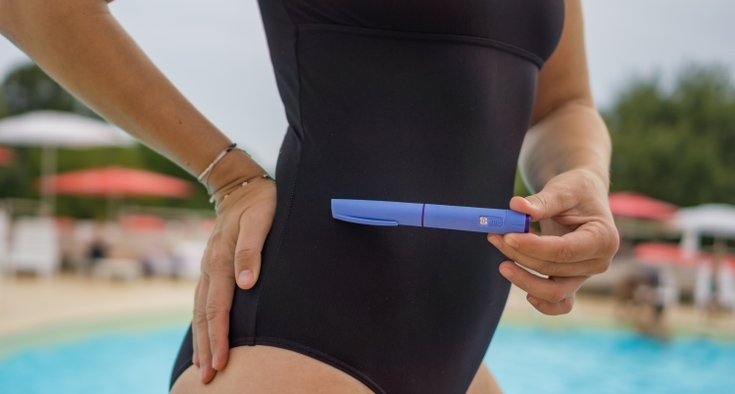
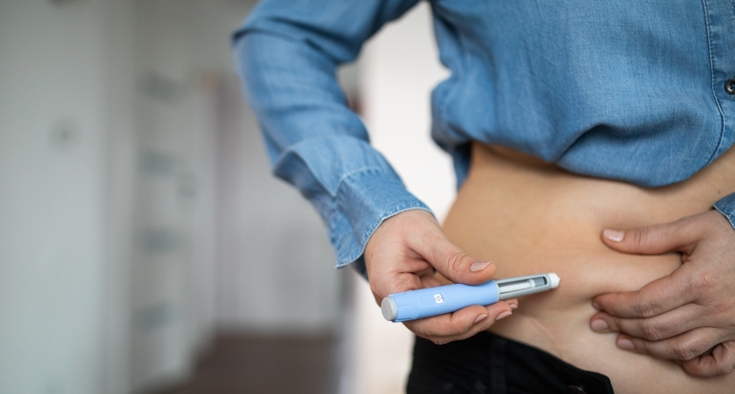
Patients self-inject Saxenda daily, or Wegovy, Ozempic, Zepbound and Mounjaro weekly using a pre-filled auto-injector pen. (Zepbound is also available in a vial.) Patients on Rybelsus or the oral version of Wegovy take a daily pill.
Patients begin at a “starting dose,” then increase their dose on a defined schedule until they reach a maintenance dose. This is done to minimize gastrointestinal side effects.
Rybelsus is manufactured in three standard doses, the Wegovy pill and Ozempic in four, Saxenda and injectable Wegovy in five, and Zepbound and Mounjaro in six.
What doses are used for micro-dosing?
Some people micro-dose by taking a very small dose of a GLP-1 drug weekly; others take a small dose every other week, or alternate weeks on and off the drug.
The common factor is that they don’t follow FDA-approved dosing protocol.
Because brand name GLP-1 drugs are only manufactured and sold in standard doses, micro-dosing usually involves compounded GLP-1 drugs.
What is a compounded GLP-1 drug?
Compounded medications are prescription medications that are custom-made for a patient’s specific needs. Traditionally, compounding is used for patients who are allergic to a medication additive or who need a liquid form instead of a pill — not for patients who could take an existing name-brand medication.
Compounded medications are not FDA-approved. They are not produced in a sterile facility or tested for effectiveness or safety. Some can have undisclosed and even dangerous additives.
The FDA has warned against using compounded GLP-1 drugs because of dosing errors, questionable ingredients, quality issues and reports of adverse events.
“Most people usually aren't okay with injecting themselves with a random unknown drug,” Cleek said. “But that’s essentially what you’re doing if you use a compounded GLP-1 drug.”
In contrast, brand name GLP-1 drugs are manufactured in a factory that is regularly inspected. They are tested for quality, purity and effectiveness.
Why are people micro-dosing?
Cleek typically hears three reasons:
- Cost: Some believe, “If I use less medicine, I can save money.”
While compounded drugs were once cheaper than name brands, current manufacturer discounts often make name brand medications just as affordable — or even less expensive.
- Side effects: Others believe, “If I take less medicine, I might have fewer side effects.”
But the side effects of GLP-1 drugs typically improve over time. Doctors can also help manage side effects by adjusting diet and lifestyle factors or recommending over-the-counter or prescription remedies.
- Fear of medicine: Some assume, “Less medicine is better.”
But Cleek would rather have patients take medication that is clearly labeled, at safe and effective doses, than to take any amount of a drug that hasn’t been adequately studied.
Overall, Cleek believes the push for micro-dosing is coming from those don’t fully understand the risks of compounded medications and those seeking to profit from “GLP-1 weight loss hype.”
Is micro-dosing effective?
There are no studies or data that show that micro-dosing works. It’s all anecdotal: Well, it worked for so-and-so — maybe it will work for me.
In contrast, brand-name GLP-1 medications underwent clinical trials involving 10,000 or more patients before obtaining FDA approval. Researchers “learned what the side effects are, and what happens when you stop taking it, when you stay on it, and when you dose up,” Cleek said.
And since approval, millions of patients have used these medications, providing years of real-world data.
“There’s no rationale to try micro-dosing,” Cleek said. “I do not recommend it.”
Can micro-dosing help if you only have a little weight to lose?
GLP-1 drugs are FDA-approved for patients with obesity, those who are overweight with related health conditions and those with specific health issues.
And those are the patients who should take them, Cleek said.
“GLP-1 drugs are being abused when patients who just need to lose 10 or 15 pounds can go to an online weight loss clinic where they may never see a doctor and may never have to report their weight,” Cleek said. “They’re getting drugs regardless of their need.”
These are powerful medications with potential for real side effects. If you’re on them, you need ongoing, close medical supervision to make sure you don’t have any reactions, that side effects are tolerable, that they’re working, and that the benefit outweighs the risks in your specific case.
If I want to try a GLP-1 safely, what should I do?
Cleek recommends seeking care at a comprehensive weight management clinic.
Many people are surprised to learn that weight is not a key indicator of health. While excess weight can cause sleep apnea and reflux and worsen osteoarthritis, the fat deep in the body (called “visceral adipose tissue”) is more closely linked to your risk of stroke, coronary artery disease, diabetes, hypertension, cancers and other diseases.
“Someone who’s only looking at the scale is missing questions like: What’s your body composition? What’s your blood pressure? How are your cholesterol levels? Do you have sleep apnea? What’s your blood sugar doing?” Cleek said.
A comprehensive clinic will look at all this and more, addressing stress management, eating, exercise, sleep, hydration and mental health too.
“We focus on much more than the number on the scale,” Cleek said. “We focus on health.”
But what if I just want to lose a few pounds?
“Most people don’t need a GLP-1 drug to lose a small amount of weight — they need a lifestyle change, like drinking water, exercising, improving their diet and staying away from ultra-processed foods,” Cleek said. “All of those changes will need to be part of the equation, whether medication is used or not.”
And if you’re putting in the work and the scale is not changing, “Talk to your doctor or see an obesity medicine specialist to see what is going on,” Cleek said. “Maybe there’s something physical, mental or emotional going on that is underlying that difficulty that we can help with.”
A holistic medical evaluation should always occur before a GLP-1 drug is ever prescribed.