

When it comes to hip and knee pain, most patients don’t need surgery. But for those who do require a joint replacement, there are ways to set yourself up for success.
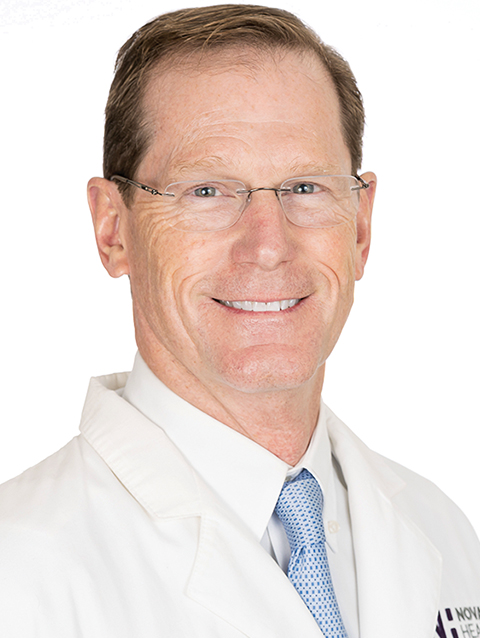
The steps you take ahead of a procedure matter not only for your outcome, but also your family or care provider. A successful recovery requires planning ahead, especially for the people and pets who depend on you, said orthopedic surgeon Dr. Scott McGinley, of Novant Health Orthopedics & Sports Medicine - Thomasville.
“The decision to have surgery is not just about you; it affects your entire family and anyone else you’re responsible for taking care of,” McGinley said. “Most patients can be treated without surgery, and I consider it a success if I can help somebody get better without it.”
Sometimes, though, a joint replacement operation is the best option. Here, McGinley addresses how to set yourself up for a successful experience.
Award-winning orthopedic care and service near you.
How important are both physical and mental preparation ahead of a joint replacement?
You might be physically ready to have surgery. But if you’re not also mentally ready, then you’re not ready at all.
Sometimes I see the opposite scenario, where patients are seeking a knee replacement without first having exhausted all conservative treatments. These include weight loss, medicines and therapy. I treat patients conservatively, meaning non-operatively, for as long as I can until surgery proves to be the better option.
How do you determine whether someone is a candidate for surgery?
That depends on the patient. In general, the ideal candidate for replacement surgery is not a smoker, weighs less than 250 pounds, is older than 65 and has either well-controlled or no diabetes.
It only takes a few minutes to help you stay active for years.
What should patients expect about the recovery process?
People generally do much better after a hip replacement and are able to walk the same day. But a knee replacement is physically harder to recover from. And if it’s your right knee, you won’t be able to drive a car for about six weeks.
Patients often ask, “Who’s going to take me to the store? Who’s going to walk my dog?” Or, “I’m a single caregiver and can’t not drive my wife around.” These are important questions to address ahead of deciding whether to have surgery.
What else should patients prepare for beyond the procedure?
There are several considerations I bring up in my conversations with patients, including:
- What’s your living situation? You’ve got to have your house ready to go for your return home. This means relocating from the second-floor bedroom until you can get upstairs and downstairs safely.
- How do you get your medicines? Make sure to arrange prescription deliveries ahead of time.
What’s the best way to motivate your partner who isn’t committed to physical therapy after the operation?
A lot of patients think surgery is going to relieve their pain, but they don’t think about the exercise work they need to put in before an operation. That preoperative physical therapy requires leg raises, knee bends and other kinds of stretching. If the patient isn’t used to doing regular exercise ahead of time, it’s going to be much harder after surgery.
What question do patients most often ask you about surgery?
“What would you do if you were me?” Here’s my response: It’s not up to me to make that decision for you. It’s up to me to educate you on your options and for you to choose what’s best for you. It’s a two-way street, and I’m going to guide you as if you’re family.
You could say that Dr. Scott McGinley grew up in a hospital.
At age 4, he began accompanying his dad, an ER doctor, on house calls. And by high school, McGinley was pulling overnight shifts as an orderly in the local New Jersey trauma center’s operating room.
Later on, father and son worked many hours side-by-side, sometimes treating as many as 100 patients a day.
McGinley graduated from Rutgers New Jersey Medical School in 1988, and has since become fluent in Spanish and made several medical mission trips to Peru.
Today, the father of four continues to live by the wisdom his dad passed down all those years ago.
“He told me, ‘Treat everybody like your family.’”


