

On the morning of Nov. 7, 2024, Karen Beaty didn’t give much thought to her annual mammogram scheduled for that day. She planned to go to the screening then check it off her list of things to do, as she’d faithfully done for many years past.
Just another appointment, she thought, slotted in among her schedule of family time with her grandchildren, church commitments and golf outings with her husband, Doc, in and around their hometown of Holden Beach, North Carolina.
Then she received the results: Her mammogram was abnormal and she needed further diagnostic imaging.
Beaty, age 69, remembers sitting with the news, a quiet certainty sinking in. “I told my husband, ‘I’ve got breast cancer,’” she said. He urged her not to jump to conclusions. After all, abnormal results from a screening mammogram are common. Fewer than one in 10 women with abnormal screening mammogram results are found to have breast cancer, the American Cancer Society reports.
But Beaty’s intuition was strong. Just a month prior, she had participated in a golf tournament fundraiser for breast cancer. And she felt like everywhere she looked — billboards, commercials, pamphlets — breast cancer seemed to be staring back. “I just knew,” she said.
Supportive care throughout your cancer journey.
Beaty called her primary care provider, physician assistant Scott Ganucheau at Novant Health Oceanside Family Medicine & Convenient Care - Brunswick, who recommended both a diagnostic mammogram and an ultrasound. These confirmed a 10-millimeter mass on her left breast, and the radiologist suggested a biopsy.
By Dec. 11, Beaty’s intuition was confirmed: Triple negative invasive ductal carcinoma, one of the most aggressive forms of breast cancer.
The words were terrifying, and the diagnosis overwhelming. “There were so many different emotions going through my mind in that moment,” she said. “Fear, anxiety, sadness, to name a few. I was in shock. There were lots of tears.”
Beaty had no idea how she was going to walk through the months ahead. Then her phone began to ring.
Care team lifelines
Ganucheau called Beaty the evening she received her diagnosis. “He was very compassionate,” Beaty said. He also immediately contacted surgeon Dr. Joseph Smith and oncologist Dr. Lindsey Prochaska. Both doctors’ offices called Beaty the next day to schedule appointments. Beaty was reeling, but comforted by the fast action.
Two days after her diagnosis, her phone rang again. This time it was Laura Clark, a breast oncology nurse navigator at Novant Health New Hanover Regional Medical Center.
“She talked with me about the emotions I was going through and assured me that she would be there for me throughout my journey,” Beaty said. “I felt comforted hearing that.”
Clark, a registered nurse who has worked as one of the hospital’s 13 cancer navigators since 2018, understood Beaty’s diagnosis in both a professional and personal way. “My sister was diagnosed with triple negative breast cancer at 43, and so that’s the reason that I do this,” Clark shared.
It’s up to the patient how much they would like to access navigation services, and Clark assured Beaty that she could reach out if she had questions or needed resources. Beaty was “thirsty for knowledge,” so the two had a long conversation and quickly established a rapport.
Clark helped Beaty understand her diagnosis and why her treatment may differ from others. Triple-negative breast cancer cells lack three key receptors that often help with care: estrogen receptors, progesterone receptors (PR) and the HER2 protein.
This absence means it is not fueled by these hormones or proteins, so some therapies like anti-estrogen drugs or HER2-inhibitors are not as effective as they are against other types of breast cancer. Consequently, triple negative breast cancer has fewer treatment options, tends to spread and grow faster and has a greater chance of recurrence, the American Cancer Society reports.
With knowledge came power. And coming from Clark, the information was comforting, too, Beaty said. Breast cancer navigators can guide patients through their journey — test results, treatment options, appointments and emotions that come crashing in like waves. For Beaty, Clark became more than a navigator. She was an anchor.
Finding a sisterhood
Friends asked if Beaty planned to travel to a larger hospital system for treatments. But Beaty felt strongly that staying close to home, with Novant Health, was the right choice, largely because of the trust and compassion she felt in her care team.
Beaty had a long road ahead of her: A surgical lumpectomy to remove the tumor, then 14 rounds of chemotherapy, then 20 radiation treatments. As her treatments began, Beaty found that Clark’s support helped her open up to others who understood what she was enduring. Women in her church and social circles reached out, sharing that they had walked this path before her.
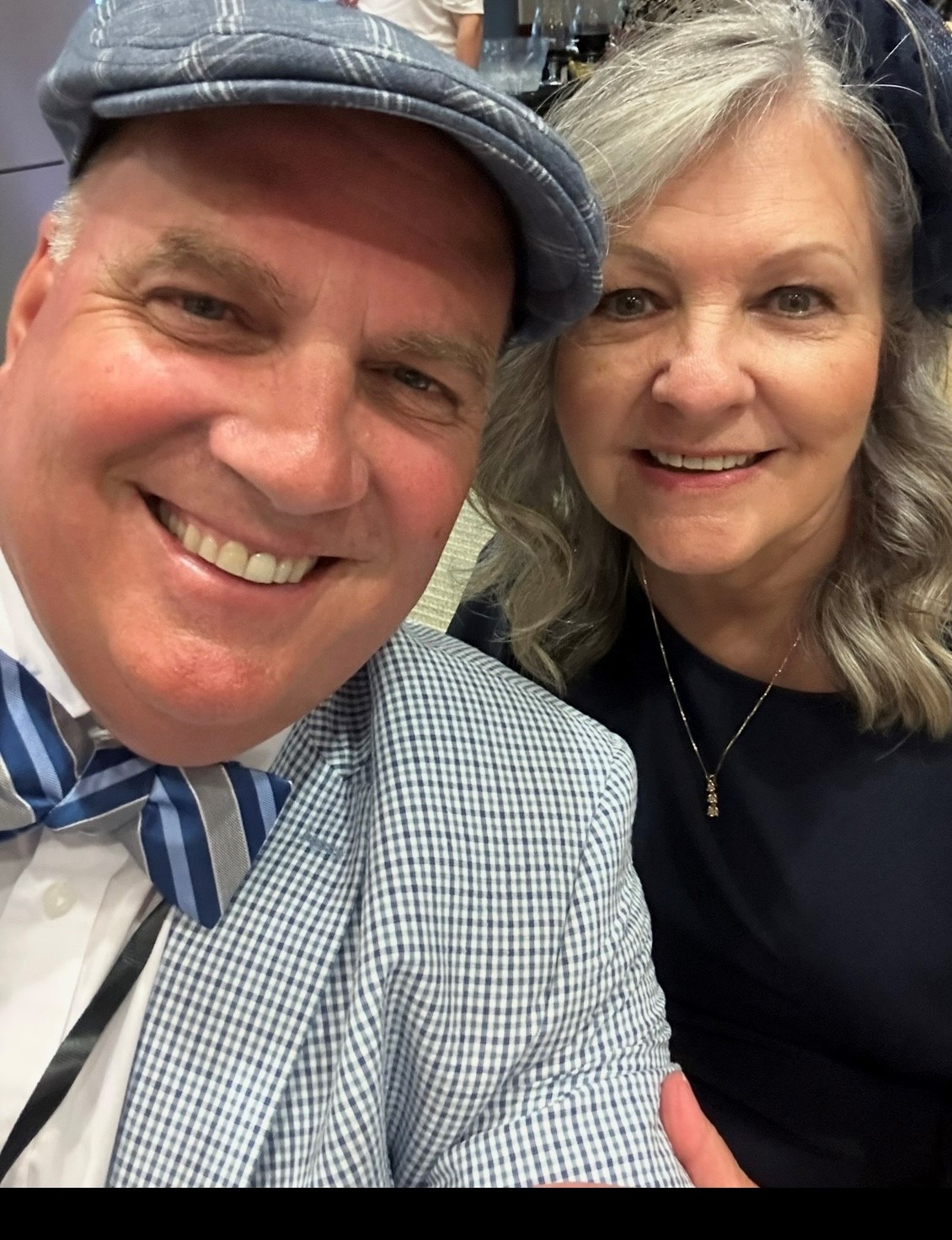
“One told me, ‘In two weeks you’ll lose your hair.’ And she was right — to the day,” Beaty said. It was a difficult change, losing this connection with her femininity. “However, my husband assured me I was beautiful with or without hair.”
A bright spot was finding Bold and Beautiful Wigs for Cancer, which a friend who had just finished breast cancer treatments introduced her to. The organization, based in Little River, South Carolina, fitted her with a wig in her natural color and style, all free of cost.
And Beaty’s husband, Doc, kept her laughing throughout her treatments. When he drove her to Coastal Carolina Radiation Oncology in Supply, North Carolina, for radiation with Dr. John McCool, he’d sit at a table in the waiting room and work on a large communal puzzle. When she emerged from the back he’d joke, “You’re done already? I’m still working on this puzzle.”
One step forward, every day
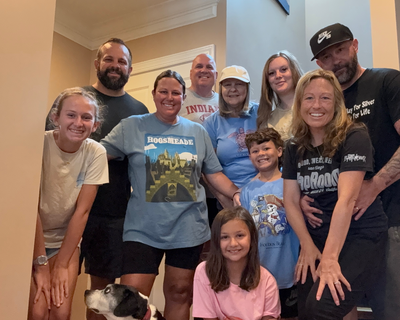
There were more challenges. Chemotherapy treatments left her feeling sick and fatigued. But along the way, she found moments worth celebrating. She developed an even stronger faith in God who, she said, has assured her she is never alone. She found herself surrounded by a husband, children, grandchildren and good friends who would not let her give up. An important lesson she learned is to accept the gifts that others want to share with you.
“No matter what those gifts are,” she said. “They may have been on a similar journey and want to share that with you. It truly brightens your days.”
And her health care team buoyed her through the challenging year. “I felt comfortable, well-informed and I trusted each one of them with my care,” she said. “I cannot say enough about the exceptional care I have been given!”
Looking ahead, fore!
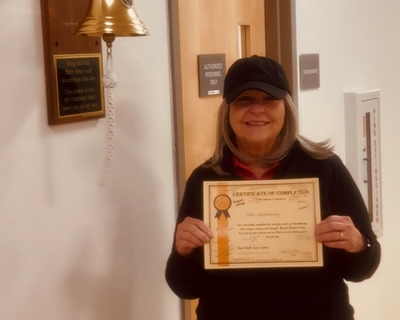
On July 7, Beaty rang the bell at the Zimmer Cancer Institute at New Hanover Regional Medical Center, signaling the end of her chemotherapy treatments, and Sept. 9 she finished her radiation treatments. As she continues to recuperate, she is focused on gratitude.
“I want to focus on having a positive attitude, taking care of my health, and surrounding myself with what brings me joy,” she said.
One big goal is to golf in this year’s Play for P.I.N.K. breast cancer research tournament at Lockwood Folly Golf Course in Supply on Oct. 21. It’s a full-circle moment, but this year she’ll participate in the fundraiser with a completely different perspective.
One message she wants to leave with other women: “Get your mammogram,” she said. “If you have not had your mammogram, get it scheduled.”


