

The sky is the color of a cinder block. A wind howls from the north. Even if the temperature hasn’t dropped below freezing, it certainly feels that way. The last thing you want to do is get outside and take a long walk.
Yet outdoor exercise under those conditions can strengthen your heart muscles, burn calories and enhance general health more effectively than in warm weather or indoors, said Novant Health exercise physiologist Molly Kabis.
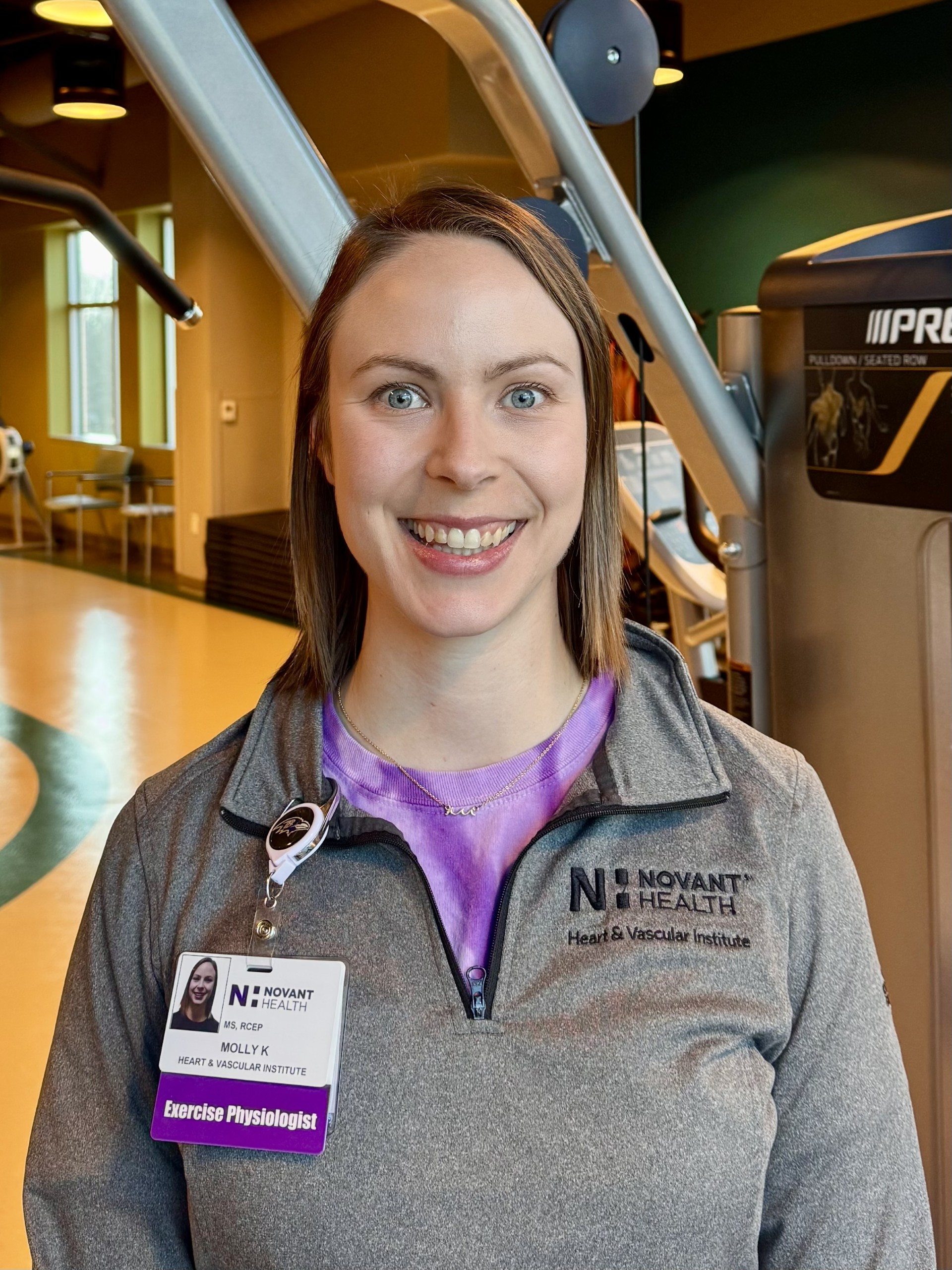
“When we are (exercising) in cold weather, there are a couple of different benefits that we get on top of just the general benefits of exercise,” said Kabis, a member of the cardiac rehab team at Novant Health Heart & Vascular Institute in Charlotte. “One of those is linked to brown fat.”
Brown fat? Yes, she explained. Humans — all mammals, actually — carry two distinct kinds of fat. The one we’re most familiar with, and most eager to lose, is white adipose tissue, or white fat. This is what builds up, typically in the belly and thighs, when we consume more calories than we burn.
The other is a kind of fat that we have in abundance as newborns but gradually lose as we age: brown adipose tissue, or brown fat. Without getting too technical, iron-rich brown fat is thermogenic, which means it produces heat by increasing the body’s metabolism and energy expenditure.
“It’s activated when it’s cold outside, like with shivering, because it’s kind of an extra survival mechanism to help keep us warm,” Kabis said.
Put another way: Shivering is how the body produces its own heat when it senses it needs to in cold weather — and it draws on brown fat to accomplish that task. When you exercise in the cold — or if you take an ice bath, cold shower or cold plunge — the body burns even more calories, including white fat, in its effort to stay warm.
In general, the more you’re exposed to cold, the more brown fat the body produces to maintain its internal temperature.
“This brown fat is much more metabolically active,” Kabis said. “It also has been linked to improving blood sugar levels and insulin sensitivity as well, which is huge for people with diabetes or prediabetes.”
Find the heart care you deserve
Other benefits of cold weather exercise
That’s not the only specific benefit to cold-weather exercise. Some others:
● It strengthens the heart. The heart has to work harder in the cold to circulate blood, which makes for a high-intensity workout for heart muscle.
● It improves endurance and overall fitness. When it’s hot and humid, you get fatigued more easily and might exercise less as a result. Cold-weather exercise can often be invigorating, which means you do it for longer.
● It can improve bone health. The longer you exercise, especially on varied terrain, the more sustained weight you place on your bones. That enhances bone density and helps reduce the risk of osteoporosis.
● Vitamin D is especially important in winter. When it’s cold but clear, outdoor exercise provides a much-needed dose of sunshine, which is good for all of us but especially those who suffer from seasonal affective disorder.
And that’s one reason why the Carolinas are a great location for outdoor winter workouts. We may not be as cold as the Northeast or Upper Midwest, but we have a nice balance of cool and cold days with sunshine and good conditions for walking, running and bicycling.
Cardiac rehab and exercise
Novant Health’s cardiac rehab team typically works with patients who have just undergone heart surgery — like a bypass or stent implant — or who have just suffered heart attacks or have chronic heart failure. Often, cardiologists will refer such patients to the team for medically supervised exercise, usually three times per week for 12 weeks, Kabis said.
As beneficial as cold-weather exercise can be, she said, team members are careful not to encourage too much of it to patients with compromised immune systems after surgery. The cons of getting sick through overexertion in the cold outweigh the pros of walking in winter.
We spoke a few days after the low temperature in Charlotte had dipped into the teens. When it’s that cold, she said, the team recommends immunocompromised patients exercise indoors “or make sure they’re really properly bundled up.”
Suggested spots for winter walking
Charlotte

The Queen City has a well-developed system of greenways. One that’s a mere mile and a half down Randolph Road from Novant Health Presbyterian Medical Center is Briar Creek Greenway. The two-mile, paved path begins next to Mint Museum Randolph, crosses the creek, then meanders through woods and wetlands to residential Meadowbrook Road. If you need to stop and rest, benches are plentiful. 2730 Randolph Road
Winston-Salem
Check out Bethabara Greenway, which runs nearly three miles from Reynolda Commons Shopping Center through the woods of the historic Bethabara community. The path varies among asphalt, dirt and boardwalk, and it’s rugged in spots: Some access points involve stairs. 2147 Bethabara Road
Wilmington
The Gary Shell Cross-City Trail runs 15 miles from Wade Park through Halyburton Park and Empie Park to the Heide-Trask Drawbridge at the Intracoastal Waterway. Thankfully, you needn’t walk the whole paved route. It has multiple bicycle and pedestrian access points to recreational, cultural and educational destinations. 3500 Bethel Road
Charleston
The West Ashley Greenway is long but easy, 10.5 miles of paved and packed-dirt trail through southwest Charleston. The greenway starts at South Windermere Shopping Center and runs through neighborhoods, schools, parks and a marsh before it reaches its southern terminus. 80 Folly Road Blvd.
Hilton Head
Jarvis Creek Park has a one-mile paved walking trail that’s geared for fitness: It includes stations with outdoor cross-training equipment that overlooks Lake Liggett. Wooden bridges save your shoes from the marshy parts. 50 Jarvis Creek Road


