

Have you noticed a soft lump in your groin, abdomen or around your belly button? Maybe it’s more noticeable when you lift something heavy, cough or exercise. Hernias are common, particularly in men. In fact, men are 8 to 10 times more likely than women to develop an inguinal hernia, which occurs when tissue pushes through a weak spot in the lower abdominal wall.
If your primary care physician has diagnosed a hernia, a general surgeon can help you understand your options. Depending on the type of hernia, your symptoms and your overall health, monitoring it may be appropriate, or surgery may be the safest choice. Here’s what men should know about what causes hernias, what to watch for, when to seek care and which treatment options are available, including robotic hernia surgery.
Expert surgeons when and where you need us.
What is a hernia?
A hernia happens when part of an organ or tissue pushes through a weak spot in the muscle or tissue wall. This often shows up as a bulge or lump that you can see or feel, and most hernias can be diagnosed with a physical exam. Hernias are very common — about
What causes a hernia?
Repeated strain on the abdominal wall can weaken the tissue over time, making it easier for a hernia to form. Increased pressure inside the abdomen can come from constipation, heavy lifting, childbirth, long-term coughing from lung disease, or repeated vomiting from conditions like bulimia.
What are common types of hernias?
- Groin (inguinal) hernias develop in the area between your lower belly and the top of your thigh. People with these hernias can often be monitored, but they do ultimately seek medical care because the hernias get bigger and cause more symptoms. Novant Health surgeons often hear from patients who wish they had gotten a groin hernia fixed sooner.
- Umbilical hernias, which appear near the belly button, often have no symptoms and can be monitored.
- Incisional hernias, which are caused by a previous surgery, require repair. The goal is to stop the hernia from getting bigger, causing more discomfort, or leading to serious problems like a blocked or trapped intestine.
A condition called diastasis recti can be confused with a hernia in the abdomen because there will be a bulge when you do a sit-up. It’s caused by a separation in the top layer of your abdominal muscles (rectus abdominus, the “6-pack” muscles), but there is no problem inside the abdominal wall, so this is not a dangerous condition.
Why should you see a surgeon even if your hernia could be monitored?
Hernias don’t always need surgery right away. In some cases, surgery is recommended sooner, such as when symptoms are concerning or when it may be safer to operate at a younger age. But small hernias that can be gently pushed back in are often safe to monitor.
Even if a hernia isn’t causing problems, it’s important to have it evaluated by a surgeon. This allows you to review your options, understand the risks, and establish care in case surgery is needed in the future. Once a hernia becomes large, painful or is more difficult to push back in, surgery may be a better option.
How do you monitor a hernia?
When we monitor hernias, we mostly focus on symptoms. We want to be able to catch any changes in symptoms such as the hernia increasing in size, pain and discomfort, as well as the hernia starting to limit someone’s daily activities.
Hernia monitoring can last a few years and only requires checkups every six months or so. We’ve monitored some hernia patients for as long as five years – they’re comfortable staying on a monitoring plan and they just want to check in.
When is a hernia an emergency?
A hernia becomes dangerous if part of the intestine gets trapped, which can cut off blood flow. Signs include a bulge that suddenly gets bigger or hard, red or discolored skin, severe pain, and nausea or vomiting.
There are different options for hernia surgery.
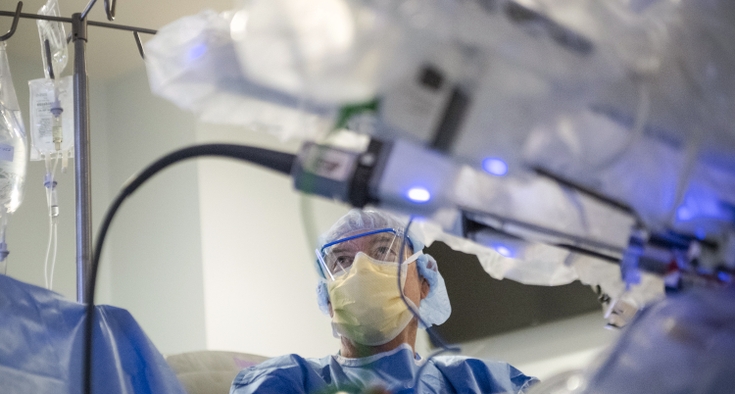
Surgery is a shared decision between you and your surgeon. Minimally invasive techniques include robotic and laparoscopic (uses small cuts and a tiny camera to see inside the body) approaches. These techniques often offer outpatient surgery, faster recovery, less pain, and earlier return to work and activities. These approaches typically allow for moderate activity within two to four weeks and full recovery inBigger or more complicated hernias may need open surgery, with a large cut, using special techniques to repair the muscle safely. These types of surgeries usually require a one- to three-day hospital stay and a longer recovery time with prehabilitation, physical therapy and a gradual return to activity.
Why is mesh often used in hernia surgeries?
Modern medical mesh is the standard for most routine hernia repairs. Typically, a thin, strong material is placed over or under the weak spot in the muscle to help support it. This can reduce the risk of the hernia coming back. While some people might be worried about complication risks with mesh, it’s designed to stay in the body safely with advanced techniques and a special coating to help prevent it from sticking to the intestines. In other words, the mesh treatment is safe.How can you prepare for a more successful hernia surgery?
The best chance for a successful hernia repair is usually the first surgery, so it’s important to be in the best possible health beforehand. Factors like obesity and smoking can increase the risk of wound infection or the hernia coming back, so it’s ideal to address those factors. Your surgeon can support you with a referral to weight loss programming as needed.
If you have a hernia, you typically have options for monitoring and surgery. It’s important to make an appointment with a general surgeon so you can understand your options, whether monitoring or surgery is the safest choice so you can continue with – or get back to – the activities you enjoy.
Surgeons who contributed to this article include:


Dr. William Hope at Novant Health General Surgery & Bariatrics - Wilmington in Wilmington, North Carolina

Dr. Steven Thies at Novant Health General Surgery - Coastal Carolina in Hardeesville, South Carolina

Dr. Paul Chandler at Novant Health Salem Surgical Associates - Winston-Salem in Winston-Salem, North Carolina


