The latest viral health trend to sweep the internet? High-fiber diets. Yes, something as mundane as fiber intake — something grandparents once talked about to no one’s interest — is suddenly all the rage.
It even has a name in some corners: fibermaxxing, or an attempt to meet or exceed the daily recommended amount. The diet “can sound extreme, but only 5% of Americans get enough fiber every day,” said Emily Mansfield, a registered dietitian at Novant Health Matthews Medical Center. “Fibermaxxing puts emphasis on where we can get fiber-rich foods during our meals and snacks.”
To understand how fiber fits into everyday life, we talked with Mansfield to answer some of the most common questions.
Helping you achieve a healthy lifestyle.
What does fiber do in the body?
Fiber plays several roles:
- Fiber aids with digestion and contributes to you feeling full so you’re less likely to overindulge.
- It also slows down how fast the body uses sugar and carbohydrates. If you’re watching your blood sugar, fiber is a great way to regulate it.
- It helps reduce cholesterol in the bloodstream, keeping our hearts healthy.
- A high-fiber diet can help reduce the risk of colorectal cancer.
Healthy adults need 25 to 35 grams of fiber a day. Reaching that recommended amount can be difficult, but there are easy ways to incorporate fiber into foods you’re already eating. Mansfield shared some of her favorite fiber-rich recipes for this article. You can see them below.
What are some easy foods people can eat to maximize their daily fiber intake?
Fruits and vegetables, specifically when you eat them with the skin on, and legumes like beans and lentils are all dietary staples that have a lot of fiber. An easy place to start is with raspberries or chia seeds: both are high-fiber foods that can easily be eaten with any meal.
Are there processed foods that offer fiber but may not be worth it, overall?
Sometimes fiber is added to foods in the manufacturing process. As a result, you may find more fiber in packaged foods such as granola bars or cereals.
While you can still benefit from foods with added fiber, it is best not to rely on them as the only source of fiber in your diet. If you do, you may miss out on key vitamins and minerals. These packaged foods may also be high in added sugars and sodium.
Why is it so hard for most of us to reach our daily recommended fiber intake in the first place?
Fiber-rich meals are not the easiest thing to make. Many of us rely on the ability to dine out, grab fast food or heat up a frozen meal. With those easy options comes the likelihood that we’re missing out on some fiber.
If you’re busy, I’d recommend adding frozen fruit to your diet. Make a smoothie, add it to your oatmeal or make overnight oats. You can add frozen vegetables to meals too, as well as no-salt-added or low-sodium canned products.
Chia seeds are also one of my favorite fiber sources because you can get a large bag that lasts a long time and add them to almost anything you eat.
Understand your diabetes risk level
Your diet, activity level, stress and daily habits all play a role in developing diabetes. A quick health assessment can help you see if you’re at risk.
Are there any downsides to the fiber trend?
Just be wary of increasing your fiber intake too quickly. That’s how eating a high-fiber diet can backfire. Too much, too quickly can cause constipation. To incorporate more fiber into your diet safely, increase your intake from two to five grams of fiber every few days while ensuring you’re drinking enough water — 64 ounces a day, at least.
Are fiber supplements a good way to get enough fiber?
Ideally, I’d want someone to try to get all of their fiber from their diet. However, there are some cases where that may not be possible, with certain chronic conditions that affect the gastrointestinal system.
Additionally, some people really benefit from fiber supplementation. In my experience, this is a choice unique to each patient. It’s definitely worth a conversation with your primary care provider if you’re interested in fiber supplements. And you should check with them before starting.
If someone wanted to increase their fiber intake, what’s one simple thing they could do today?
I would pick one small goal and start there. Maybe you’ve been eating white bread and are ready to switch to a whole-grain bread. Maybe you want to incorporate a new fiber-rich food. Just take that first step, see how it feels, and allow your body to adjust.
Takeaway: It takes intention to reach fiber goals, but it is manageable. There are so many healthy foods that can help, and the closer you get to the recommended daily amount, the healthier you’ll be. It’s about progress, not perfection.
High-fiber meal ideas
Breakfast: Whole-wheat toast (3g of fiber per 1 slice) smeared with avocado (3g per ⅓ avocado) and a lean protein such as eggs
Lunch: Mediterranean style bowl with black beans (8g per ½ cup), chickpeas (5g per ½ cup), and fresh vegetables (8g per 1 cup)
Dinner: Lentil soup (9g, see recipe below) with a side of berries (8g per 1 cup)
Snacks: Greek yogurt with chia seeds (10g in 2 tablespoons), vegetables (8g per 1 cup) dipped in hummus (3g per ¼ cup)
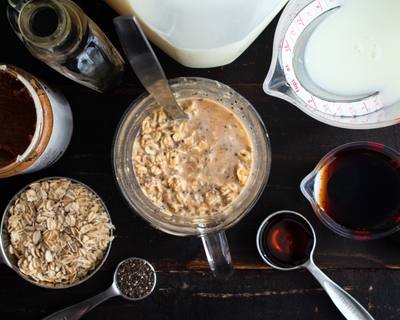
Peanut butter overnight oats
Recipe from ‘The Gift of Good Health,’ a collection from Novant Health Cardiopulmonary Rehab, Cancer Wellness, and Oncology Dietitians. Makes one serving.
Ingredients:
- 1/2 cup rolled oats
- 1/2 cup milk of choice
- 1/4 cup plain Greek yogurt
- 1 tablespoon chia seeds
- 1 tablespoon peanut butter
- 1/2 tablespoon pure maple syrup
- Pinch of kosher salt
Preparation:
- In a bowl or container with a lid, combine all ingredients and stir to combine.
- Cover the bowl or container with a lid or plastic wrap.
- Place the oat mixture in the refrigerator and let it sit overnight.
- In the morning, stir the oats well. If the mixture is too thick, add a little more milk to reach desired consistency.
Per serving: 421 calories; 17 g total fat; 4 g saturated fat; 15 mg cholesterol; 222 mg sodium; 49 g total carbohydrate; 9 g fiber; 16 g total sugars (including 6g added sugars); 20g protein
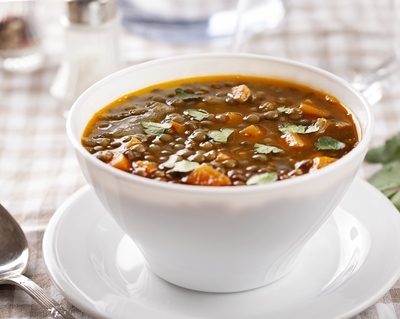
Recipe from ‘The Gift of Good Health,’ a collection from Novant Health Cardiopulmonary Rehab, Cancer Wellness, and Oncology Dietitians. Makes eight 1.5-cup servings.
Ingredients:
- 2 tablespoon olive oil
- 1 yellow onion, diced
- 4 medium carrots, diced
- 2 celery stalks, diced
- 3/4 teaspoon ground cumin
- 1 teaspoon black pepper
- 4 cloves garlic, minced
- 1 (14 ounce) can fire-roasted diced tomatoes
- 3/4 cup dry green lentils, rinsed
- 2 tablespoons white wine vinegar
- 6 fresh thyme sprigs, bundled
- 6 cups vegetable stock
- 6 cups dinosaur kale
- 1/2 cup fresh parsley, chopped
Preparation:
- In a large pot over medium heat, heat the olive oil. Add the onion, carrots, celery, cumin and pepper and cook, stirring occasionally, for 8 minutes or until the vegetables begin to soften.
- Stir in the garlic, tomatoes, lentils, vinegar, thyme and vegetable stock.
- Cover and simmer for 25 to 30 minutes, or until the lentils are tender.
- While the soup is simmering, prepare the kale. Remove the kale stems and chop into 1-inch pieces.
- Add the kale leaves to the soup and cook for an additional 5 minutes, or until wilted.
- Remove the thyme bundle and season to taste. Garnish with parsley for serving.
Per serving: 178 calories; 5 g total fat; 1 g saturated fat; 0 mg cholesterol; 382 mg sodium; 26 g total carb; 9 g fiber; 8 g total sugars (including 0g added sugars); 7 g protein