Rena Kratky’s story of gradual, substantial weight gain — and then dramatic weight loss — is relatable in some ways but foreign in others.
Some may recognize themselves in Kratky’s journey. But few of us can imagine growing up without electricity and having to scavenge through trash cans for something to eat.
This is the story of how a college professor gained weight, developed Type 2 diabetes and arthritis, survived a horrendous car crash and was forced to use a walker to get around. At her heaviest, Kratky thinks she weighed more than 3

But finding Dr. Neil McDevitt and the Novant Health General Surgery & Bariatrics - Mount Pleasant team was the plot twist Kratky, 68, needed. McDevitt performed a gastric bypass — a form of bariatric surgery in which the surgeon creates an egg-sized stomach pouch to help limit food intake.
Kratky put in the necessary emotional and physical work. And she continues to. She’s lost about 200 pounds (so far), has improved, or eliminated, her medical conditions and now has a second chance at life.
Clinically proven weight loss solutions to help you lose weight and keep it off.
Chapter 1 — Life before obesity
Kratky wasn’t always overweight. As a kid and teen, she rode her bike everywhere and played on the softball and basketball teams in high school.
Food was often scarce. “My sister and I would sometimes pick food out of the trash can at school if we saw that kids threw some of their lunch away. My parents were divorced, and my mom did her best. When she was able to put dinner on the table, we ate everything.”
As was common in pockets of Appalachia in the early 1960s, Kratky’s house didn’t have electricity or running water. But she doesn’t want pity. And times weren’t always hard, she said.
Kratky knew education was her ticket out. She didn’t want to drop out of high school and have a baby at 17, as her mother had. So, she became the first person in her family to graduate from college and the only one to earn an advanced degree.
She taught in Hilton Head public schools — she was one of the original English as a second language (ESL) teachers in South Carolina — before becoming a Spanish professor at the University of South Carolina Beaufort.
She and her husband, Petr, enjoy an interesting hobby together. They raise and show bull terriers, those distinctive-looking dogs with egg-shaped heads that served as a mascot for Bud Light in the 1980s (that’s Spuds MacKenzie) and as Target’s mascot, Bullseye, today.
Petr takes them in the ring — something Kratky wanted to do. But her limited mobility kept her from it.
She had to watch from the sidelines as their dog Sophie was voted “Best in Breed” the first time she ever competed. They still have her and one of her pups. “Sophie is literally the best dog I’ve ever had. … Our dogs go everywhere with us and sleep with us; they’re our babies.”
Chapter 2 – Hey, where’d those extra pounds come from?
Obesity is a disease for which there can be many causes. Although the food insecurity she experienced as a child haunted her into adulthood, it wasn’t the only factor in Kratky’s weight struggle. “My dad was big, and my grandmother was big,” she said. “Genetics weren’t on my side.”
Kratky first noticed the scale had moved upward when her “baby,” now grown and living in Colorado with his own family, was a newborn. She hadn’t gained much weight during pregnancy, but during his first year, Kratky almost imperceptibly gained 100 pounds. “Looking back,” she said, “it’s possible I could’ve had postpartum depression.”
Then, in 2016, she was in a serious car accident and flown to a Savannah hospital with a collapsed lung and eight broken ribs. Her knee was also injured, but her medical team was much more focused on the more serious issues.
Recovery was long, slow and painful. She grew increasingly sedentary. The health issues resulting from that bad knee weren’t noticeable until they became impossible to ignore. Doing everyday things, like laundry, was a struggle.
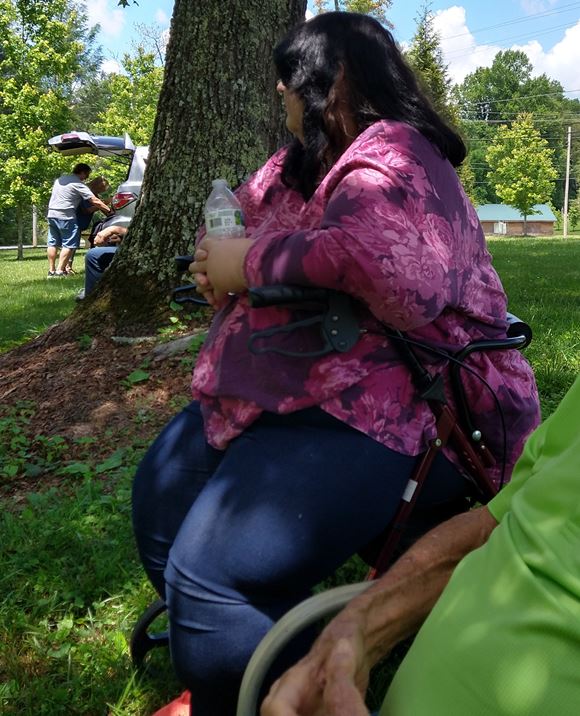
Personal accountability is an important part of the work McDevitt’s patients do before surgery, and Kratky admits: “A lot of this is my own fault,” adding, “I ate junk I shouldn’t have eaten, and I often ate to comfort myself.”
That’s extremely common. “Many people inadvertently eat to alter brain chemistry,” McDevitt said. “We might eat from boredom, loneliness, chronic pain. And the food we reach for is usually a starch or simple sugar — things like candy, sweet tea, soda and juice.
“Consuming those actually does make us feel better temporarily, but those foods tend to promote weight gain, which makes us feel worse, which has us eating to feel better, which makes us gain weight.”
Chapter 3 – No easy fix
Kratky tried everything to lose weight.
She even had lap band surgery (one type of bariatric surgery) — but she wasn’t happy with the results. McDevitt doesn’t consider that failed surgery, though: “I think that experience put her in a position to be even more successful with the bypass.”
Exercise became nearly impossible with her worsening knee. “I thought: I’m going to be this huge woman who has to be pushed around in a wheelchair,” she said.
In 2020, she wanted to ditch her walker and get
Kratky was over 380 pounds when she sought a knee replacement. Her orthopedic surgeon told her she needed to get down to 217 before he could operate.
Chapter 4 — Putting in the work for a gastric bypass
Bariatric surgery is no magic bullet.
“You have to change everything — everything — about the way you live,” Kratky said. “It’s not easy on your body. It's not easy mentally. You have to really want this. I was tired of sitting on the sidelines. I want to participate in life — not just observe it.”
And although surgery isn’t an easy way out, the results of gastric bypass, also called Roux-en-Y, seem almost miraculous.
“With gastric bypass, people will typically lose 60% to 80% of their excess body weight within a year to 18 months of surgery, from the surgery alone,” McDevitt said. “So, we knew Rena could lose 120 to 140 pounds before she’d even need to do her part to get the rest of the weight off.”
She’d already done a lot of work in the pre-op program for nearly a year before her September 2024 surgery. “That program broke me of my bad food habits,” she said. “I don't want sweets anymore. I used to be able to kill a whole bag of potato chips by myself. I don’t eat them anymore, either.”
McDevitt gives his patient all the credit. “Rena kept food journals, used a pedometer — she showed us she was 100% engaged,” McDevitt said. “She did a fantastic job of separating head hunger from body hunger, which helped her prepare for surgery.”
She’s still losing weight, but she’s already down to
Kratky’s case isn’t unusual. In 70% to 90% of cases, Type 2 diabetes goes into remission after bariatric surgery, McDevitt said. “Even people who have pre-diabetes have a profoundly decreased risk of developing diabetes if they've had bariatric surgery,” he said. The surgery also:
- Increases GLP levels and several other hormones that affect diabetes
- Improves the pancreas’ ability to produce insulin
- Decreases the inflammation caused by fat cells
- Improves the body’s ability to metabolize sugar
Keeping the weight off and blood sugar levels in the normal range requires daily maintenance, and McDevitt and his team prepared Kratky for that. “Much like your car requires maintenance, life after bariatric surgery requires a degree of fine-tuning,” he said. “And that’s for the rest of your life, which is also how long we’ll continue to support you.”
Chapter 5 — Life after surgery: Rena’s renaissance
Kratky’s drastic weight loss has been “more of a mental than physical adjustment,” she said. Catching her reflection in a window recently, she didn’t recognize herself because, she said, “In my head, I’m still this big lady. It’s still a surprise when I discover I can do things easily that used to be a struggle.”
Things like loading the dishwasher, which used to be a challenge.
But her plans are much more ambitious than household chores.
“My grandkids — who are 21, 15 and 13 — live 45 minutes from the Rocky Mountain National Park and within a couple of hours from several others,” she said. “I used to have to sit in the car while my family hiked. Next time I visit, I’m going with them.”
Post script
She can do that, thanks to both her weight loss and the knee replacement Dr. Harold “Del” Schutte, Jr. of Novant Health Orthopedics & Sports Medicine - Joint Institute in Mount Pleasant, South Carolina performed in January.
While taking it easy at home during 12 weeks of physical therapy, she’s been culling her closet of clothes that no longer fit and having fun buying new pieces. She no longer needs the walker. She’s joined a recreation center nearby and has been using the indoor walking track. She’s worked her way up to three-fourths of a mile and is ready to go for a mile very soon. She looks forward to writing children’s books starring her dogs and taking international trips with friends.
Kratky doesn’t bemoan her previous chapters — even the childhood that was hardscrabble at times.
They helped make her who she is today. “It gave me empathy for others and made me resilient.”
Meanwhile, she said, “I feel like I've gotten my second shot at life.”
Body hunger and brain hunger: Dr. McDevitt’s clinic addresses both
Dr. Neil McDevitt “takes time to get to know you as a human being,” said Rena Kratky. “And that makes a big difference in your success.”
Every staff member at Novant Health General Surgery & Bariatrics - Mount Pleasant is invested in patients’ success. It’s a place that’s entirely free of judgment, McDevitt said. “The first thing I tell patients is: In this clinic, you will never be berated, belittled or treated like anything other than somebody who’s here to get help.”
Society sends them a different message. “Sometimes even medical professionals will tell them, ‘Gosh, your diabetes will improve if you’d only lose weight,’” McDevitt said. “I think obesity remains the last socially acceptable form of discrimination.”
McDevitt also encourages his patients to make themselves and their health a priority. “Self-care isn’t selfish,” he tells them. “Many people who struggle with weight are so busy caring for everyone else's needs, they neglect their own.”
He and the staff, which includes a dietitian and a therapist, work with patients to devise a nutrition plan they can stick with.
“If I need a calculator to figure out what I'm eating for dinner, I'm not going to do it,” McDevitt said. And deprivation isn’t likely to work, either. The clinic’s focus is on three meals a day plus two healthy snacks.
“We want people to be able to incorporate their diet plan into their family’s life and their social circles without becoming a pariah,” he said. “So, you can go to a barbecue and still eat a burger; it’s just without the bun. You can go to a restaurant and exchange the rice for vegetables.”
Confronting the reasons we overeat isn’t easy, but it’s necessary. “My patients dive deep into the connection between emotions and food,” he said. “We talk about and target the two types of hunger: body hunger, which is driven by a whole host of hormones, and brain hunger, which is driven by serotonin and dopamine.”
Kratky’s evolution is one of thousands McDevitt has supported over the years. “I have the best job in the world,” he said. “I have the opportunity to envision who people can become, and then I get to witness the transformation.”