There’s a new GLP-1 medication on the market — and it isn’t a shot.

In December 2025, the Food and Drug Administration (FDA) approved an oral version of Wegovy for obesity — the first time that a GLP-1 medication has been offered in pill form for weight loss.
Bariatric surgeon Dr. Neil McDevitt of Novant Health General Surgery & Bariatrics - Mount Pleasant explains what the oral GLP-1 is, who it’s for, and what patients can expect.
Find the weight-loss care you deserve.
What is a GLP-1?
GLP-1s mimic a hormonal process in your body that regulates your appetite. They reduce your cravings and hunger and help you feel satisfied while eating less food.
These medications were originally FDA-approved to treat Type 2 diabetes, then gained approval for weight management. When combined with diet changes and regular physical activity, many patients find that GLP-1s accelerate weight loss and make it easier.
What is the ‘oral’ GLP-1, also known as ‘the GLP-1 pill’?
Before December 2025, three injectable GLP-1 medications were approved for weight management in adults:
- Semaglutide (brand name Wegovy)
- Liraglutide (brand name Saxenda)
- Tirzepatide (brand name Zepbound)
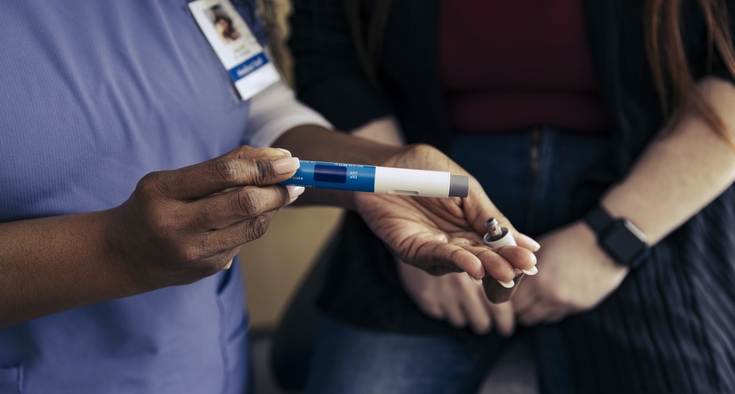
To get the medication in your body, you’d use a pre-filled autoinjector pen to give yourself a shot once a week. (Zepbound was also available as a vial with a syringe and needle.)
Now, Wegovy is available as a daily pill, made with the same ingredient as the injectable version.
Who’s the oral GLP-1 for?
The Wegovy pill is FDA-approved for adults who have obesity, or who are overweight with at least one weight-related medical problem. It’s for people who are ready to make lifestyle changes to lose weight and improve their health.
Understand your diabetes risk level
Your diet, activity level, stress and daily habits all play a role in developing diabetes. A quick health assessment can help you see if you’re at risk.
What is the benefit of the oral GLP-1 compared to injections?
Injectable GLP-1s work well for many people. However, some patients struggle with the idea.
There’s something about emotionally preparing yourself to put this pen against yourself and incur some minor degree of pain, then sit there while it injects and for 30 seconds afterwards, that can be hard for some people.
Now, I can offer patients a choice: “You can choose to inject yourself once a week, or take a pill seven days in a row.” For some people, a pill will feel easier: “No sweat, I can take a pill — I already take medication for blood pressure and a statin for my cholesterol. I can add this one to the list.”
I’m hoping that having the oral GLP-1 will drive costs down and make GLP-1 medications even more accessible.
How much weight loss can you expect? And what about side effects?
With injectable semaglutide, patients lose an average of 15% to 20% of body weight in a little over a year. In studies conducted so far, oral semaglutide performs similarly — there’s slightly less initial weight loss on the pill, but longer-term weight loss is comparable.
Side effects are similar, too: Most commonly, patients experience nausea, diarrhea, vomiting, constipation, stomach pain, heartburn or headache. More rare side effects include pancreatitis, gallbladder and kidney problems or thyroid tumors.
How do you take the oral GLP-1?
Every day, you swallow the whole pill with a sip of water, then wait 30 minutes before you take other medications, eat or drink, which allows it to be absorbed.
There are four doses (1.5 mg, 4 mg, 9 mg and 25 mg); your doctor will start you on the smallest dose and guide you as you move from a smaller dose to your maintenance dose. If you miss a dose, you skip that day’s dose and start again the next day.
Injectable GLP-1s have to be stored in a refrigerator; the oral GLP-1 can be stored at room temperature.
Does the pill do all the work?
No — and this is critical.
There’s a specific way you must eat and exercise while on any type of GLP-1 — otherwise, you can lose lean body mass and slow your metabolism, damaging your health.
Unfortunately, there’s a growing “side hustle” culture around GLP-1s where people are getting medication without any of the instruction they need. This is like giving your child the keys to your car but not teaching them how to drive — it puts people in a position where they’re losing weight, but they’re not safer or healthier.
That’s why I’m so proud of our center: We don’t just write prescriptions, or just do surgeries. We walk you through all the lifestyle changes you will need to make to be successful for long-term health — not just immediate weight loss. It’s much more comprehensive.
What does it cost? And does insurance cover it?
Costs and coverage vary widely depending on your insurance plan and your specific health issues.
Due to manufacturer discounts, it is often cheaper to self-pay than to run it though insurance and pay your co-pay. As of publication, for self-pay patients:
- Injectable GLP-1s start around $350 per month.
- The oral GLP-1 costs can vary depending on when you seek the medication. As of this writing, you may see prices from $149 and up per month.
Is there anyone who shouldn’t take this medication?
Is the oral GLP-1 really new?
You may be thinking, “Wasn’t my friend already taking a GLP-1 pill?” You aren’t totally off base.
Rybelsus, an oral form of semaglutide, has been FDA-approved for adults with Type 2 diabetes since 2019. However:
- It was not FDA-approved for weight loss.
- It could not be prescribed “on label” for obesity.
- Its dosing differs from the new Wegovy GLP-1.
The newly approved oral Wegovy is the first GLP-1 pill that is FDA-approved for weight management.
This medication is not recommended if you have:
- A personal or family history of medullary thyroid cancer
- A history of digestive issues like irritable bowel syndrome (IBS), inflammatory bowel disease (IBD), gastroesophageal reflux disease (GERD) or gastroparesis
If you aren’t a candidate or can’t tolerate GLP-1 medications, you have other options. For example, bariatric surgery naturally increases your GLP levels for up to a decade after surgery — offering similar metabolic benefits without medication.
Will I be on the oral GLP-1 forever?
GLP-1s are often compared to blood pressure medication: If you have high blood pressure, you get on blood pressure medication, it controls your blood pressure, and you never come off of it.
Yes, many people have to be on blood pressure medication forever — but some people can decrease or even come off their blood pressure medication through weight loss, exercise and eating better.
In an ideal world, I’d love to see us use GLP-1 medications to help jump-start lasting lifestyle changes, alter our relationship with food and movement, and correct the things that have contributed to our weight struggles in the past. Let’s use these medications to change your lifestyle, and then we’ll keep you on the lowest dose possible to maintain your weight.
What’s the next step if I’m interested in an oral GLP-1?
Ask your primary care doctor to refer you to a comprehensive obesity management program. These programs focus on improving your health and offer medical oversight, nutrition and mental health guidance, and long-term support.