

A patient showing up repeatedly at the hospital can signal something deeper.
At Novant Health Brunswick Medical Center, a man in his late 50s returned to the emergency room multiple times with chest pain over several months. But his situation extended beyond a diagnosis: he was also unhoused, malnourished and showing signs of cognitive impairment.
Cases like his are where community health workers step in.
Often less visible than hospital staff, community health workers are on the front lines of care in a different way: they meet patients where they are — sometimes in shelters or on the streets — and connect them to critical health resources.
“Growing up, I always wanted to help people,” said community health worker Winter Brown, 34, who joined Novant Health in 2016. “You wouldn’t want somebody to say to you, ‘There’s nothing wrong with you, you’re just homeless.’ These are human beings.”
We're dedicated to making health care accessible to everyone.
Earning a patient’s trust
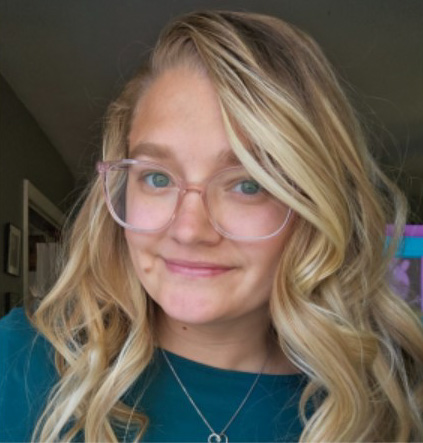
Brown is one of 28 community health workers embedded across Novant Health’s three North Carolina regions, working as part of a broader community health team that includes interns, paramedics and peer support specialists. While social workers often focus on inpatient care, community health workers extend that care into the community. But they often work together.
Case manager Amanda Bennett, a social worker, referred the patient in his 50s to Brown. Because there was little documentation regarding the man’s cognitive ability, Bennett and Brown advocated for further testing. Results pointed to a dementia diagnosis, a critical piece that had been missing from the man’s care.
Patients assigned by case managers to community health workers are often unhoused, without a phone, or both. Some days that means Brown gets into her car and goes to look for patients. Over time, Brown learned that the man often hung out in the woods or behind local stores in Shallotte, North Carolina. But that familiarity didn’t happen overnight.
“A lot of people are not aware that we’re here and how we can help,” Brown said.
Building that awareness and trust is a big part of the job, and can take a long time. But Brown shows up consistently for her patients.
“I reach out to them almost every day to say, ‘I’m still here, and we’re going to get through this,’” she said. “They crave that trust. They need that trust because they have nobody else.”
A cycle of advocacy and follow-up
Brown partnered with the SSI/SSDI Outreach, Access and Recovery team (SOAR) to help her patient apply for disability benefits. She also worked with the Brunswick County Homeless Coalition to secure temporary housing, and filed reports with Adult Protective Services to ensure additional support. While in temporary housing, the man did not return to the hospital even a single time. And later, Brown and Bennett’s cycle of advocacy and follow-up led to a long-term housing solution for him.
“Amanda and I worked very closely together with this gentleman,” Brown said. “We were able to get him placed in assisted living, because the proper testing proved he was not capable of living on the streets.”
Community health workers manage a backlog of referred patients who may require care for weeks or months, depending on the severity of their needs, such as access to food and primary medical care.
For Brown, a mother of two, the work draws on years of experience as a certified nursing assistant and her ongoing pursuit of a master’s degree in social work.
“I have such an amazing job,” she said. “It’s about letting people know that we’re here, and that we can help them.”


