Back pain is something many people deal with, but it can be hard to know when it is more than just a bad day or a sore back. In this episode of Meaningful Medicine with Novant Health, Dr. Alex Thomas explains the signs that may point to a more serious issue, like nerve pain, numbness or weakness in the legs. He walks through when to start with primary care and how patients move toward specialty care for spine conditions.
You will also hear how spine surgery has evolved and why minimally invasive techniques are changing outcomes. Smaller incisions, faster recovery and more precise treatment are now possible for many patients, but surgery is not always the first step. Physical therapy and strength playing a key role in managing back pain and improving mobility.
It only takes a few minutes to help you stay active for years.
Carl Maronich (Host): Welcome to Meaningful Medicine, a Novant Health podcast, bringing you access to leading doctors who answer questions they wish you would ask. From routine care to rare conditions, our physicians offer tips to navigate medical decisions and build a healthier future. I'm Carl Maronich. And today, we'll be talking to Dr. Alex Thomas, a neurosurgeon from Novant Health about spine surgery and how it can support mobility. Doctor, welcome to the podcast.
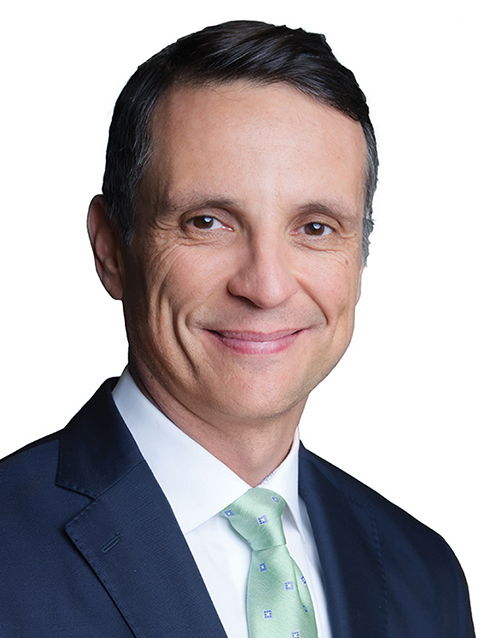
Dr. Alex Thomas: Thanks for having me, Carl.
Host: I'm glad to have you here. Back pain is not an uncommon thing. What are some signs that it's more than aches and pains and it's time to be assessed by a specialist?
Dr. Alex Thomas: Well, absolutely. You said it, Carl. I think, particularly as we get older, back pain affects more people than not. For better or worse, it certainly keeps the clinic busy. And I think for the most part, and the vast majority of cases, back pain is just part of life. It's not anything to worry about per se. It certainly can be bothersome or even debilitating. But generally, it's not something to be afraid of or fearful of. When it can be an issue is when there's signs that there's neurological issues along with the back pain. So typically, back pain affects the low back or the lumbar spine. And so, we would be looking for symptoms: pain, numbness, weakness radiating down into the legs. When you start having that, that could indicate, "Okay, maybe there's a more significant structural issue going on, and maybe it's time to seek attention." Of course, your viewers are probably familiar with some of the red flags that could indicate something very sinister, like an infection or cancer. You know, fever, weight loss, night sweats, I'm not talking about those. Those are obviously indications to seek help right away. If you have back pain with those other symptoms. But I'm talking about general kind of degenerative, arthritic back pain, the old, bad back. That's what I'm talking about here.
Host: Sure, Doctor. Sometimes the path when it comes to healthcare can be a little bit of a challenge. Generally, I would guess someone's going to start with their primary care provider. Is that generally true? And then, where may the journey go from there?
Dr. Alex Thomas: Absolutely. I mean, just generic back pain is one of the most common reasons that patients go see their primary care physician. So, you're right. The journey often starts at the primary care physician. And then, that typically starts the chain of events that usually leads to us.
Oftentimes, patients will get referred first by the primary care doctor to physical therapy, maybe a chiropractor or even pain management. And then, usually, we're the next step from there. Obviously, if there's a profound neurological issue, like leg weakness or a foot drop, an astute PCP is going to pick up on that and send that patient to us right away and bypass those other steps. But for garden variety back pain, yes, there's definitely a chain of events that happens before they get to a surgeon's office.
Host: So, maybe let's talk a little bit about spinal surgery and who's a good candidate for surgery?
Dr. Alex Thomas: Right. So I mean, spinal surgery, to be fair, that's a very wide net that describes a lot of different things. So, I'd say on the spectrum of surgeries that I do, it ranges anywhere from almost kind of a very minor pain management procedure all the way up to an extensive fusion at the front and back of the spine for a scoliosis. So, there's a wide range of things. And typically, patients kind of progress along that spectrum too. Sometimes they start with just a disc herniation. They require very small surgery. But unfortunately, their condition progresses to need the bigger surgery.
So, I think to go back to your question about who needs these operations, it really is kind of patient-dependent and who's the best candidate for this? Obviously, if the patient has bad enough symptoms that we can clearly attribute to an MRI or x-ray findings, then yes, that patient is a suitable candidate. Typically, we will make certain that we've exhausted all conservative measures first. Surgery, particularly in the spine, is not to be taken lightly. And so, we want to be certain that patient has tried physical therapy, they've tried injections, they've tried medication management. And despite all that, their symptoms persist. Then we say, "Look, you have to be able to look at yourself in the mirror and say, 'I tried everything. Now, I can go to the next step and take on this operation.'"
Host: And, Doctor, you specialize in minimally invasive surgeries. Maybe you can share more about that approach and how that benefits the patient.
Dr. Alex Thomas: Absolutely. So, traditionally, you know, nobody ever wants to hear that they need a spine operation. So, when they come to my office, everybody has a horror story about somebody that they knew who had a surgery on their spine that ended badly. And so, I'm already up against that sort of propaganda or these misconceived notions. But some of it's warranted. I mean, traditionally, spine surgery used to be done with big midline incisions on the back, and I'm certain your viewers haven't seen that, but it is a barbaric thing to watch. And it's a miracle that patients ever get up and walk again.
So, minimally invasive surgery was developed, you know, probably about 15-20 years ago. The goal of that is to treat the pathology, the problem in as specific a way as possible without all of that extra collateral damage. How do we treat the problem without causing other issues? Because, unfortunately, traditional spine surgery could do that. And so, we've adopted that minimally invasive mindset to all different types of surgery, whether it's fusions, tiny little incisions, very advanced corridors to the spine, all the way to what I think is the most advanced way to do spine surgery these days the least invasive way – and that's with an endoscope where, through an incision the size of the tip of your pinky, come down to the spine, identify a problem with this high-resolution camera and treat the problem. It's like you haven't disturbed the spine at all. So, it really has come a long way, even in the short time that my career has been since I started in 2010. It's already changed so much, and it only continues to change.
Host: Yeah, I understand you've been at the forefront of offering lateral single position surgery for spinal fusions. Talk a little bit about that technique.
Dr. Alex Thomas: So, lateral single position surgery is something that we pioneered at Novant New Hanover Regional Medical Center. So, one of the flagship minimally invasive fusion techniques is something that's been around for about 20 years where we approach the spine from the side. And that avoids, again, a lot of that collateral damage from opening up someone's back.
The problem with that is that traditionally once you finished up on the side, you would then take the time to take all the drapes off, reposition the patient to do screws and rods or other work at the back of the spine. Sometimes if you have to come to the front of the spine, then you're repositioning the patient all day long, and that's a surgery that can take all day. And so, in 2013, we thought, "Why are we wasting so much time repositioning the patient? Why don't we just start to try to do the work at the back while the patient is still on their side?" And that's really how it started. And from there, it's only evolved to really allow us now to treat just about all pathology of the lumbar spine with the patient on their side.
And one thing that's really cool is, for cases where we have to come to the front of the spine, in the U.S., we typically work with a general surgeon or a vascular surgeon who does the approach to the front of the spine to get us there. And so, what's cool about working with the patient on their side is that while the surgeon's working on the front of the patient, I can be working on the back of the patient. So, that simultaneous work allows us to do an operation that used to take six hours in an hour and a half.
The importance of that cannot be understated. When you can save someone, a patient, that much time under anesthesia, you could imagine how much better that is for the patient. The risk of complications just goes down significantly. So, that's something that we're especially proud of. We keep trying to push the envelope there. And I think our patients are reaping the benefits of that.
Host: Yeah. From that standpoint, what are you hearing in terms of feedback from patients?
Dr. Alex Thomas: It really has allowed us to more successfully treat even the most complex problems in the lumbar spine. So, these are patients where they're going home in a day or two after a scoliosis surgery, for example. And they're amazed at that fact. But then, you know, they're coming back with significant reductions in pain, if not complete resolution of their back pain. And so, I think the patients really do well, and they appreciate that. And I think the word's gotten out about what we're doing down here on the coast.
Host: And, that said, outcomes, if you're hearing great things about the outcomes the patients are having, that's impressive stuff. When you're assessing a patient with back pain or mobility issues, how does physical therapy come into play? You talked about that a little bit earlier, but maybe you could expand on how the process of physical therapy for those patients.
Dr. Alex Thomas: I think that this is really one of the most underappreciated aspects of the care of these patients. So, it may be surprising to some of your viewers, but as a surgeon, particularly when it comes to these fusions, even with these advanced techniques that we do, my goal is to avoid having to do that operation on the patient.
And so, how does that happen? I am a huge believer in physical fitness strength and physical therapy as an avenue to accomplish those goals. And so, I have seen many patients who have profound structural issues in their spine really dedicate themselves to physical therapy and strengthening of their body. And they get profound benefits. And a lot of them end up avoiding the operation. I think, unfortunately, in this country there's, you know, so many patients, particularly as they've gotten older, they've spent their whole lives working, sitting in a chair at a desk and that does profound damage to the supporting musculature of your spine. And I'm not just talking about the core muscles that you see for some muscle man who's done a bunch of situps. I'm talking about all the muscles that support the spine, not just the core, but the legs, the glutes, all those things atrophy as we spend all this time sitting.
And so, the therapist can help start the patient down that path to begin strengthening and rehabilitating to build that strength back up. Patients when I tell them, "Look, I need you to dedicate six hard months to therapy and strengthening," sometimes they roll their eyes, and they think, "Look, this is not going to help. This is dumb." But it really is shortsighted. Because I have seen when patients commit to strength training, commit to something like Pilates, the results can be remarkable. And then, you avoid the operation completely.
Host: Oh, well, Doctor, you look like you practice what you preach. Because it seems like you're at a standing desk right now. Are you standing?
Dr. Alex Thomas: Yes. Yeah. You're very astute. Absolutely. And I bought standing desks for every member of my team too. It's very important. But that's just one of many things that are important.
Host: Well, I'm going to back up and ask about technology. Earlier, you mentioned that since you started practicing, technology has really advanced in this area. And you mentioned that with the single position that you're doing, where do you see it going? Are there things coming on the horizon that you're excited about?
Dr. Alex Thomas: So, yes, that's what's really cool about neurosurgery in the field that I am lucky enough to find myself in. It's evolving at such a rapid pace. The technological advancements that are occurring in neurosurgery and spine surgery are truly amazing. And so like I said, even since I've started in 2010, it's almost a completely different field since when I started.
And so, the things that come to mind in terms of non-surgical things, I think we're getting a better understanding about how strength contributes to the stability of the spine. I think even compared to 2010, people are much more aware of the importance of fitness and strength. Of course, GLP-1, agonists like Ozempic or Wegovy have just in the past two years, completely changed the landscape here. So, you're seeing patients who were previously obese, previously would require some sort of bariatric surgery, now can take a pill even and see dramatic weight loss. So that in itself, it has some downsides and that's a whole other podcast episode. But just the profound weight loss that you see really has changed the game for spine surgery.
So then, moving on to surgery, I talked about spinal endoscopy. We are finding ways to treat spinal pathology pretty much without even opening the patient up. That's super exciting to me as an evolution in my career. We now have sophisticated navigation technologies where we can take a CAT scan of a patient's spinal anatomy, input that into a system, and then essentially use that system to guide us straight to the anatomy of their CAT scan.
I know I didn't explain that well. But if your viewers could see that in the OR, it's amazing. Previously, you'd have to open a patient up and look at all their anatomy. Now, you can just use this 3D navigation and have sub-millimeter accuracy when you're putting in screws and rods or spacers into someone's spine.
The next thing I think is robotics. Everybody's heard about spinal robotics now. Robots have made their way into spine surgery and are becoming more and more useful to help us treat spinal conditions more accurately. And then, last thing, it goes without saying, any podcast on any topic now is going to mention artificial intelligence. That's going to, I think, dramatically change how we diagnose conditions and make sure that we offer the right treatment for the right patient.
I think what can still frustrate me sometimes for spine surgery is I can pick a patient who I think is going to be a good patient. I can execute perfectly on the surgery and still they don't quite get the results that they want. Thankfully, this is an exceptionally rare occurrence, but it still happens. And that is really frustrating to be able to sit there and look at a patient and realize you haven't helped them as much as they had hoped for. And so, why is that? What are we missing there? And I think aggregation of big data with artificial intelligence is going to help us identify, "All right, you know, there's something about this patient that you may want to look out for that may be a little bit of a pitfall here." So, that's what's really exciting too.
Host: Well, Doctor, you speak very passionately about all of it. How did you choose neurosurgery as a specialty when you were considering what field to get into?
Dr. Alex Thomas: It's a funny story that I tell medical students that I work with. I knew I wanted to do something with my hands. I like building things, taking things apart. And so, I knew I wanted to do surgery. I had a lot of outside passions. And so, something like neurosurgery was never on my radar because I wanted to have, I guess, what they call a good work-life balance.
At Georgetown where I went to medical school, you do six weeks of general surgery and three two-week blocks of specialty surgeries, and they're basically assigned to you. I had ENT, urology, and neurosurgery—completely arbitrary. I decided I wanted to do something else and I tried to get out of the neurosurgery rotation. I emailed the dean and I said, "Look, I want to do this other thing, anesthesia. Can I get out of neurosurgery?" And they said, "No, you've already been assigned to it. Nobody else wants to do it. We can't switch it around." And here I am. And so, that's how arbitrary it can be. You know, I went on the service. I was blown away by the immediate impact these surgeries were having on people. Everybody seemed happy. And here I am. It was just an unlikely path. But sometimes those paths are predetermined for you, you know, and you just kind of let it take you there. And I'm so thankful. I can't imagine doing anything else now.
Host: Dr. Alex Thomas, a great conversation. We appreciate all the information. I will say you've left me feeling a little guilty that I'm sitting and you're standing.
Dr. Alex Thomas: Get yourself a standing desk, Carl.
Host: I'm going to get a standing desk and I'm going to try to do it right. But thanks so much for joining us.
Dr. Alex Thomas: All right, Carl, take care.
Host: To find a physician, visit novanthealth.org. For more health and wellness information from our experts, visit healthyheadlines.org. If you enjoyed this podcast, please share it on your social channels and check out the entire podcast library of topics of interest. I'm Carl Maronich. And this is Meaningful Medicine. Thanks for listening.


