

Most people wouldn’t consider slipping on the ice to be a stroke of good luck. But it was for Sheryne Glicksman of Asheville.
In late December 2022, Glicksman, now 64, took a tumble while on her way to the gym in Winston-Salem, where she was living at the time. She’d moved there for a job after 30 years in Florida.
Nothing was broken, but “by mid-January, I wasn’t feeling right,” she said. “My head and back felt ‘off.’”
She went to an ear, nose and throat doctor who discovered her tonsils were four times their normal size. She had them removed. “Five days later, on Valentine’s Day,” she said, “he told me something no one wants to hear: ‘You have cancer.’”
It was tonsil cancer, a type of oropharyngeal cancer (tumors that develop in the oropharynx, or middle part of the throat) that’s on the rise. (See the sidebar below for more on this.)
Glicksman, who’s since moved to Asheville, shared her story at a public hearing there in December 2025. She spoke in support of Novant Health’s successful application for a new 34-bed hospital in Buncombe County.
Supportive care throughout your cancer journey.
‘Not everyone has symptoms’ of tonsil cancer
That slip on the ice was good luck because Glicksman had no symptoms. If she hadn’t felt a little “off,” her cancer might not have been discovered at Stage 2.
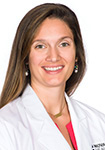
“Not everyone has symptoms,” said Dr. Ileana Jacks, the medical oncologist/hematologist at Novant Health Cancer Institute - Forsyth who treated Glicksman. “It’s very common for it to be discovered when a dentist notices enlarged tonsils during an exam. If the cancer becomes more advanced, it can cause pain or difficulty swallowing; pain in the jaw and ear; and make it difficult to open your mouth completely.”
But Glicksman experienced none of that.
At their first meeting, Jacks told Glicksman that the “gold standard treatment” for tonsil cancer involves both chemo and radiation. Because her cancer was caught so early, she had a 90% to 95% chance of beating it if her “body could handle the treatment,” she remembers being told.
It’s a grueling course of six rounds of chemo and 33 radiation sessions. And for most people, including Glicksman, it also involves a feeding tube. She had a port with a feeding tube inserted into her stomach. Because of swallowing issues, she needed it for more than a month. In addition, she had a second port to receive chemotherapy implanted in the top of her chest.
“Every step of the way, my Novant care team was there,” she said. “They sat with me and supported me through the hardest days. They taught me how to feed myself through the tube. Their collective encouragement made all the difference.”
Meredith Smith was the nurse navigator assigned to guide Glicksman through treatment. Meeting her “was one of the most pivotal moments of the whole journey,” Glicksman said. “She became my lifeline. I was living alone, and she laid out everything available to me — a registered dietitian, therapist, counselor, integrative medicine, which included yoga, meditation, even acupuncture. I took advantage of all of it. Meredith gave me a roadmap when I was lost.”
Getting by with help from her friends
Smith provided one kind of support; friends and family provided another. The dear friends Glicksman met when their children were toddlers showed up in ways Glicksman never imagined. She calls them her “soul sisters.”
They surprised Glicksman by finding a short-term rental house in Winston-Salem by the hospital where she was getting treatment. They dubbed it the “Healing Shala,” as “shala” is the Sanskrit term for “house.” Glicksman moved in, and every week, a different friend would come to town to stay with her and accompany her to every radiation, chemo and doctor’s appointment.
Her brother and his wife and her adult son, Dylan, were also huge supports. He and his then-new girlfriend would both come to Winston-Salem from Texas to help.
“One of the first times I met my son’s girlfriend, she was here to support me,” Glicksman said. “All the help I got — from family, friends, colleagues and even strangers — was unbelievable. It was something I'll never forget.”
A great reason to take care of yourself
“I went into cancer treatment very healthy,” said Glicksman, who takes not a single prescription medication. “And I tolerated all of it pretty well, I think, because of that.”
Her oral health is also excellent, which served her well during treatment. Some people need to have teeth removed before they can begin radiation for head and neck cancer. Glicksman didn’t.
Radiation to the head and neck can have long-lasting after-effects. It puts you at increased risk of carotid artery disease (if they’re in the radiation field), sleep apnea and chronic dry mouth, which increases your risk for cavities. So, doctors often recommend having any unhealthy teeth pulled before radiation.
Unrelated to radiation, “a lot of head and neck cancer patients are at higher risk for depression,” Jacks said. “Food doesn’t always taste the same afterward, and that can take away some of the joy of eating, although most of that improves with time.”
How yoga can help with cancer treatment
Yoga is a big part of Glicksman’s health and wellness regime. She’s been a practitioner for 13 years — ever since a friend invited her on a yoga retreat. She’s gone on many since and earned her yoga teaching certification.
“Yoga didn't just change my life,” she said. “It was a component in saving my life. It teaches you to bring things back to the now.”

Yoga taught her the importance of focusing on her breath — something that helped her endure radiation. Before each session, a mask that had been custom made for her was placed on her head and clipped into place. Once radiation began, she’d begin focusing on her inhales and exhales.
“To this day, if I get really nervous about anything,” she said, “I bring it back to the now by using my breath.”
Glicksman doesn’t let even big setbacks derail her. She’s an executive who’s been in IT for 33 years, but she viewed a recent job loss as an opportunity to integrate yoga and the leadership development and training she loves. Her mission is to bring health and wellness into the workspace by offering leadership workshops and retreats that combine mindfulness and movement through yoga.
It’s a natural next step. She had already started a blog (sgchangeagent.com) to offer inspiration taken from her daily life and travels. And she’d had a draft of “Emerging: A Mindful SOULution to Managing Life and Leadership Goals” complete when she got the cancer diagnosis.
“I wrote it as a self-help guide to share how I've enhanced my leadership skills through yoga,” she said. “When I learned I had cancer, I knew I’d regret it if I died without getting my book published. It was published on International Women's Day — March 8, 2023.”
You don’t have to always be strong
Cancer taught Glicksman that “there’s compassion everywhere.” And that’s not the only silver lining she managed to find during what she describes as a “brutal, yet incredible, experience.”
“I became a single mom when my son, who’s 28 now, was 9,” she said. “I’m used to being independent and strong, but cancer made me realize: There’s strength in vulnerability. At first, I didn’t like feeling vulnerable, but then I realized that’s a lesson we all need.”
Glicksman learned she was cancer-free in September 2023. Since then, she’s had to discover that recovery is a slow process. For the first six months, she wore earbuds at concerts due to sensitivity caused by radiation. She also had fluoride treatments for her teeth since radiation can weaken them.
She’s back to doing yoga, weight training, hiking and has worked hard over the past two years to strengthen her body, spirit and mind.
“I’m probably in the best shape of my life, mentally and physically,” she said. “Cancer really did shift my perspective; it changed me for the better. I feel like a woman of clarity and purpose now. I let a lot of stuff go that I used to dwell on.”
Glicksman, who’s become adept at starting over, will do it again in May when she moves to Texas to be closer to her son. She said, “We have a greater understanding now of how precious life is.”
HPV-related cancers are on the rise — even though almost all are preventable
Only 63% of those eligible get vaccinated
More than 80% of sexually active people will be exposed to HPV (human papillomavirus), a common, sexually transmitted virus, in their lifetime, according to a January 2026 story on the Association of American Medical Colleges’ (AAMC) website.
And over 90% of oropharyngeal cancers — a category that includes tonsil cancer — are squamous cell carcinomas, which are often caused by HPV. The virus can also cause vulvar, vaginal and penile cancer, in addition to cervical and anal cancers, which are HPV-related in 90% of cases.
More and more people are being diagnosed with these preventable cancers. The AAMC story reported “a surge of oropharyngeal cancer, disproportionately affecting men. (Men are diagnosed with head and neck cancers at more than four times the rate diagnosed in women.) Rates of anal, penile, vaginal and vulval cancers, while rare, are also increasing.”
Close to 58,000 cases of oropharynx cancer are diagnosed each year in the United States, according to Dr. Ileana Jacks, but how many are caused by HPV, as compared to smoking, isn’t tracked.
Tonsil cancer “isn’t common,” Jacks said, “but we are seeing more of it due to the HPV virus. We used to see tonsil cancer exclusively in smokers, but that’s not the case anymore. People who've never smoked are getting it because of this virus. And most are in their 60s and 70s.
“I’ve had patients who’ve been married (and monogamous) for 35 years who get this cancer, and they're just shocked. But they were probably exposed to it in their 20s. Most people clear the virus, but there’s a small percentage of patients who don't. And they can end up with cancer.”
Vaccine could prevent nearly every case
In 2006, the FDA approved the first HPV vaccine, Gardasil, for females between the ages of 9 and 26. (The German virologist who discovered the HPV/cervical cancer link, Dr. Harald zur Hausen, won the Nobel Prize in Physiology or Medicine for his discovery.)
A second HPV vaccine, Cervarix, was approved for boys in 2009.
The vaccines, which you only need to get once, are highly effective at preventing cancer, yet “only about 63% of eligible Americans are getting vaccinated each year,” Jacks said.
The reason for the low vaccination rate, Jacks said, is that too many parents think: This is a sexually transmitted disease, and my child isn’t sexually active, so he or she won’t get it.
Her response: “Hepatitis B is also a sexually transmitted disease, and we vaccinate our children against that one. It used to be thought that you had to be promiscuous to be exposed to this virus. But the truth is: Most adults have been exposed. And it can lie dormant for decades.”
Tonsil cancer FAQs
Tonsil cancer is a type of head and neck cancer that begins in the tonsils, most often in the oropharynx (the middle part of the throat).
Common symptoms of tonsil cancer include a persistent sore throat, difficulty swallowing, ear pain, a lump in the neck or one tonsil appearing larger than the other.
The two main risk factors are infection with human papillomavirus (HPV) and long-term tobacco and alcohol use. HPV-related cases are now the most common in the U.S.
Diagnosis typically involves a physical exam, imaging (like CT or PET scans), and a biopsy to confirm cancer cells.
Yes, tonsil cancer is treatable. Many cases — especially those linked to HPV — respond very well to treatment and can be cured, particularly when caught early.
Treatment often includes radiation therapy, chemotherapy, surgery or a combination. Many patients today are treated successfully with chemo and radiation alone.
If you have symptoms of tonsil cancer, see a primary care doctor to be evaluated. Do not wait or ignore symptoms — early cancer diagnosis makes a meaningful difference in cancer treatment outcomes. Click here to make an appointment with a primary care provider.


