

Marsha Obremski traced her index finger over her phone and held up a recent photo. It’s an action shot — she’s out for a run on a warm Coastal Carolina day.
“Does this look like cancer to you?” Obremski asked. She looked vibrant, healthy and strong.
“But I had cancer,” she said.
Obremski was diagnosed with Stage 1 rectal cancer in December 2025. At 46, she had no major risk factors: No family history of colorectal cancer, she is not a smoker, she does not drink, and although she “does enjoy a steak,” she shares with a laugh, she does not eat a diet heavy in red meat or processed foods. She stays active with running.
In retrospect, she realizes the symptoms of colorectal cancer were there, but she dismissed them, chalking them up to stress, diet or hormones.
“It happens so gradually, it just becomes your new normal,” she said.
It took the words of a caring confidant to encourage her to get the cancer screening that may have saved her life.
Compassionate support and expert care through every step of your cancer journey.
A friend’s encouragement
As a kindergarten teacher at Topsail Annandale Elementary School in Hampstead, the coastal North Carolina town where she lives, Obremski doesn’t get many breaks in her day. So when subtle symptoms began — stomach discomfort and changes in bathroom habits that meant she was frequently ducking out of her classroom — it was her instructional assistant, Leann Brown, who noticed.
“I was like, ‘This is so embarrassing, so don't tell anybody,’” Obremski recalled about confiding in Brown. She felt the frequent urge to go, at times every 15 minutes, but nothing came out. Or other times, she passed blood. Brown reassured her, no need to be embarrassed, but you should see a doctor.
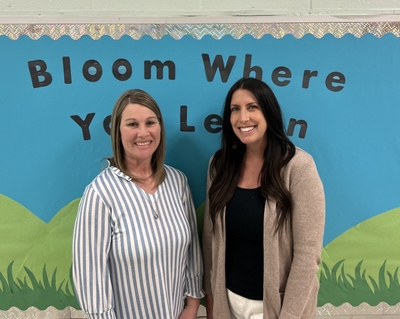
Obremski didn’t think it was urgent. Brown was persistent. “She stayed on me for a couple weeks, saying, ‘Did you make your appointment yet?’” Obremski said.
She made an appointment at Novant Health’s colon and rectal surgery clinic in Wilmington for Dec. 5. They scheduled her to have a colonoscopy, a test that allows a doctor to see the inside of the colon, on Dec. 9.
When she woke up from the anesthesia, colorectal surgeon Dr. Whiyie Sang delivered the news: He found a tumor in Obremski’s rectum, the last 6 inches of the digestive tract. He took a biopsy and would send it to a pathology lab.
Just 36 hours later, Sang had the results. It was a malignant tumor called adenocarcinoma. Obremski had colorectal cancer.
As answers came in, so did a plan
Obremski returned to her classroom the following day. She knew she would need to take time off work and prepare for a substitute teacher. “But I would not allow myself to fully believe that I had cancer,” she said.
She began to realize the seriousness of her situation when MyChart notifications started pinging, signaling diagnostic appointments in the next few days.
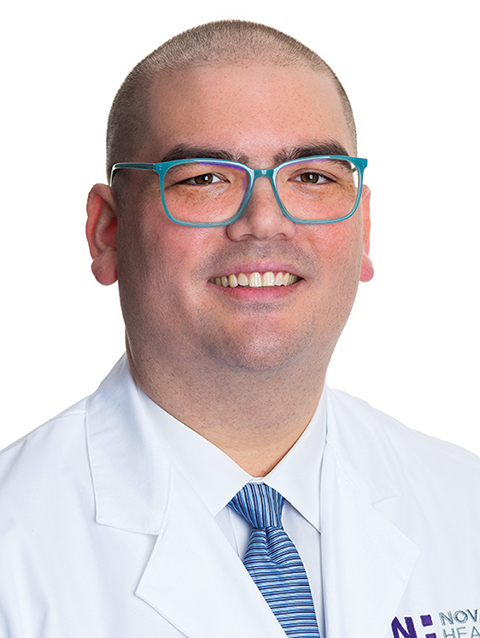
After a CT scan and an MRI — imaging tools used to detect tumors, determine staging and plan cancer treatments — Sang recommended surgery to remove the tumor.
“We talked about Marsha in our multidisciplinary tumor board at the Zimmer Cancer Center,” Sang explained. “It's a big multidisciplinary meeting with the medical oncologist, radiation oncologist, radiologist, pathologists and surgeons, and we come up with a very individualized plan.”
On the fast track to healing
On Jan. 5, exactly one month after Obremski’s initial appointment, Sang removed part of her rectum, along with 26 lymph nodes, at Novant Health New Hanover Regional Medical Center. Using a robotic surgery technique, he made only five tiny incisions, allowing for faster recovery and less pain.
Obremski underwent surgery on a Monday. On Thursday, Sang visited her in her hospital room with some good news: None of the lymph nodes showed any evidence of cancer.
The colorectal cancer symptoms she almost ignored
Looking back, Obremski can see the warning signs she once dismissed:
- Ongoing stomach discomfort and bloating
- Frequent urges to use the bathroom without results
- Changes in stool shape (thin, pencil-like stools)
- And eventually, bleeding
Today, 1 in 10 new cases of colorectal cancer occur in someone under the age of 50. Even if you’re under 45, the recommended age for your first colorectal cancer screening, don’t ignore these symptoms. Make an appointment with a primary care physician, who can evaluate whether you need a colonoscopy.
“The cancer was very early, so no need for chemotherapy, no radiation. She was cured with just a surgery,” Sang said.
Obremski returned home to Hampstead on Friday and settled in for her recovery with peace of mind.
“I just feel so incredibly blessed that he was so proactive,” she said.
Obremski’s surgery day was also the first day back to school after winter break for her kindergarten students. That day, her principal shared the news with school staff and gave students a letter Obremski had typed to share her diagnosis with their parents.
“Everyone’s been very supportive,” Obremski said. “When you work at a school, it’s like you have an extended family.” This family also extends to her two adult kids who live nearby, her church family and her neighbors, all of whom have checked on her daily and brought meals during the weeks that followed her surgery.
Changing the conversation
Fueled by the support of her family, colleagues and friends, Obremski is now helping to remove the embarrassment that comes with talking about colorectal cancer, and to normalize the conversation.
“Before this, I had never talked to another adult about poop,” she said with a laugh. “But we need to.”
She’s now inspired to start networking with the Blue Ribbon Run, a Wilmington-based nonprofit foundation dedicated to raising awareness about colorectal cancer after its co-founder, Ana Brown, lost her sister to the disease at just 41.
“Ana visited me in the hospital and we quickly became friends,” Obremski said. “I really would love to help promote awareness and let people see that it’s not something embarrassing to talk about.”
Since sharing her story, Obremski has already influenced others to take action.
One friend scheduled a colonoscopy after Obremski told her the recommended screening age had dropped from 50 to 45. During that screening, the doctor found and removed a polyp — potentially preventing cancer before it could start.
Her advice: Don’t wait
Today, Obremski is continuing to heal. Soon, she will be able to return to her classroom, to running — “to absolutely living a normal, healthy, full life,” Sang said.
In the meantime, she’s focused on one goal: encouraging others to listen to their bodies. Even healthy people. Even without family history. Even without obvious risk factors.
“If something feels off, don’t ignore it,” she said. “Go get checked.”


