


When Dr. Daniel Pierce was a teenager, he and his two brothers worked at their dad’s auto mechanic shop in Midlothian, Virginia.
Now, as an orthopedic surgeon with Novant Health Orthopedics & Sports Medicine in Clemmons, Winston-Salem and Wilkesboro, North Carolina, Pierce can’t help but see the similarities.
“A worn-out joint replacement in a car and in the body are pretty similar,” he said. “The instrumentation and the tools are pretty similar — drills, saws, screwdrivers. Some of the instruments I use now are even made by the same manufacturers that make tools for cars.”
Pierce is a special breed of orthopedic surgeon who has built a subspecialty in the field of revision surgery.
Revision surgery differs from primary total knee replacement in that it’s a more complex procedure that requires extensive planning and specialized implants, according to the American Academy of Orthopedic Surgeons (AAOS).
You don't have to live with joint pain.
From classroom to clinic
Pierce discovered a love for caring for injured patients after joining his hometown volunteer rescue squad in high school. The experience eventually led him to orthopedics.
But first, prior to medical school, Pierce spent two years teaching seventh and 12th grades as a member of Teach For America in Houston. His students were from underserved neighborhoods.
“About a third didn’t have any English speakers at home,” Pierce said. “Many of them, when they came to middle school as sixth graders, didn’t speak any English. These kids were seeing their parents deported and having to live with extended family. It was a very difficult situation for them.”
Just as Pierce sees similarities between auto mechanics and orthopedic surgery, he also sees how teaching and medicine compliment each other.
Ever the teacher, Pierce makes sure patients know what to expect and have the information they need for a smooth recovery. That’s a key part of the job.
What no patient wants to consider — revision surgery
Because Pierce specializes in revision surgery, he often operates on people whose first surgeries didn’t heal properly — or failed years later.
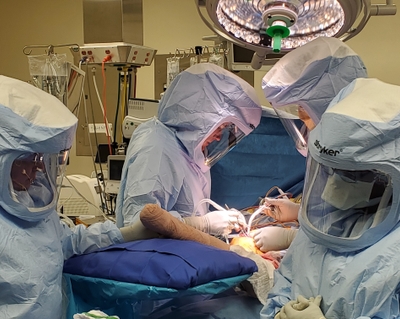
It’s not that surgeons are doing anything wrong to warrant those revisions. It’s a numbers game, Pierce said.
With more than 1 million hip and knee replacements done every year in the U.S., infections are common, as are other problems that can follow surgery.
“After two years, loosening is the most common cause of revision surgery,” Pierce said. “And once a replacement becomes loose, they don’t become unloose. They continue to get looser and cause bone loss, which can be painful.”
Then there are patients who are doing well but experience further trauma, such as a car accident, that may cause an implant to loosen.
Another reason is osteolysis, or bone degeneration, that can occur as a complication of joint replacement surgery. Occasionally, polyethylene or another material in a joint implant can wear down, leading to debris accumulating in the surrounding joint tissue.
Many patients are reluctant to have joint replacement surgery — and Pierce doesn’t blame them. But patients who need a revision are generally quicker to jump to surgery because they know what to expect. “When we talk about infection or loosening, we’re talking about conditions that are not going to get better,” he said. “Those patients are more apt to want to pursue surgery.”
Injured? Get immediate orthopedic care.
Bring on the tough cases
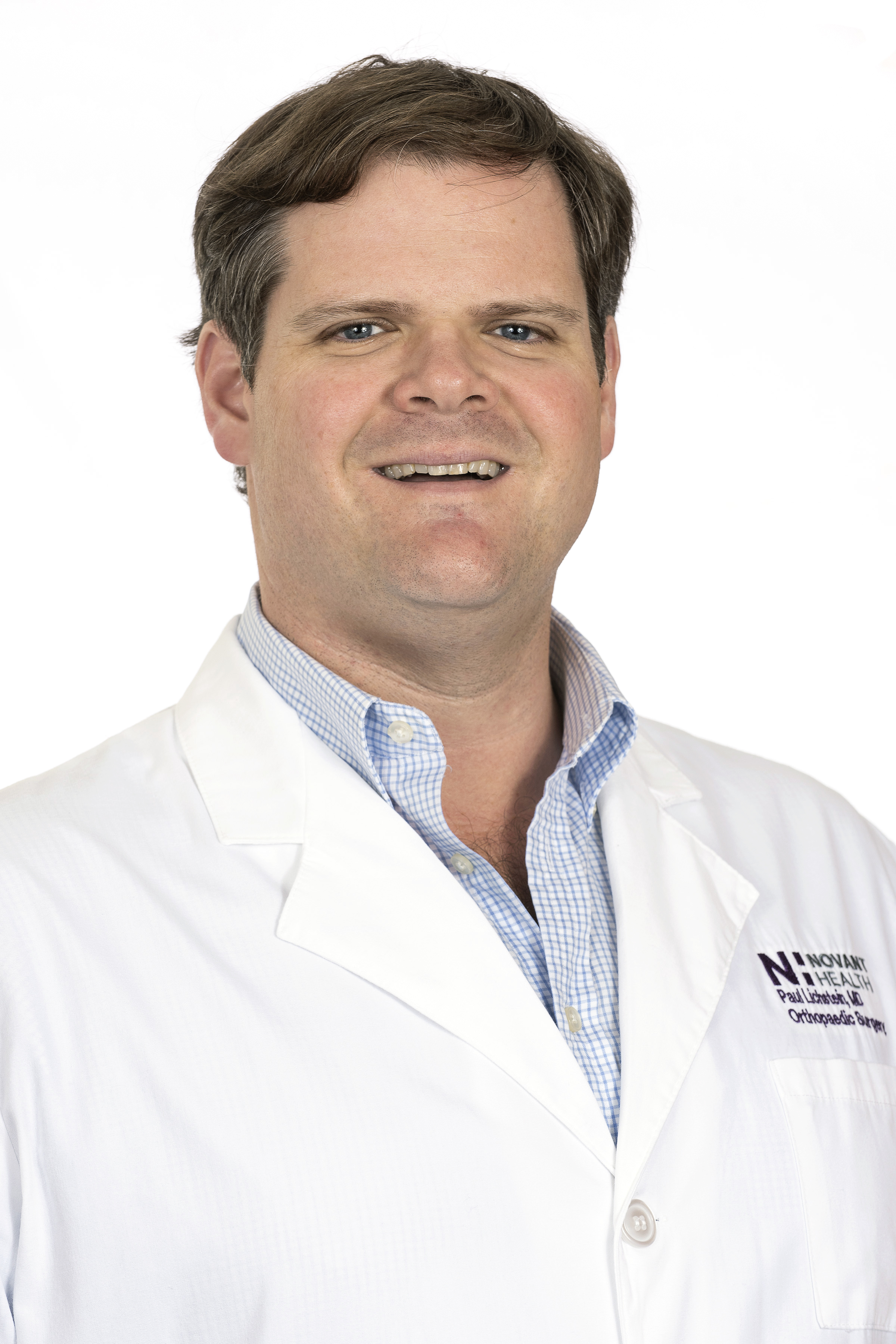
Dr. Paul Lichstein, another orthopedic surgeon who specializes in revision surgery at Novant Health Clemmons Medical Center, recruited Pierce.
“When we met, I thought: He’s exactly what we’re looking for,” Lichstein said.
For one thing, Pierce was ready to return to small-town life. “Folks are on a first-name basis here,” he said. “That’s not something you get at a larger hospital.”
Lichstein, too, is right where he wants to be. “I grew up in a small town and like the feeling of a small town,” he said. “They don’t need more of what I do in Boston or San Francisco or another big city. They need more of what I do here.”
In talking about Pierce and the subspecialty they share, Lichstein said, “There are people who derive satisfaction and pride from taking on tough challenges. It takes a certain mentality, a certain personality. We deal with a lot of adversity — revision surgeries can be difficult, and the outcomes may not always be excellent. Dan was … ready for that.”
Lichstein said he has never met another orthopedic surgeon who once worked as a mechanic — but he does see the similarities. “It’s a very dexterous thing we do,” Lichstein said. “There’s also a very important concept of 3-D interpretation. You have to be able to think about things in three dimensions. There are similarities with both carpentry and with mechanics, but there’s a certain artistry to what we do, too.”
‘Not just a single episode of care'
While they both like a challenge, neither doctor is a glutton for punishment. “I just like doing really hard things,” Lichstein said. “The gratification that comes from those successes is unlike anything else. Dr. Pierce and I are kindred spirits in that way.”
Their love of revision surgery goes deeper than the thrill of the challenge.
“Dan and I both appreciate the incredible relationships we can develop with our patients,” Lichstein said. “It’s not just a single episode of care. We develop lifelong relationships with some patients. You become friends, partners, in seeking a solution. Revision patients require a great deal of thought, planning and interdisciplinary care. We might involve infectious disease colleagues, oncology, internal medicine, hematology. Orthopedics isn’t isolating. It’s a field that allows you to make connections with patients and other clinicians.”
“There’s nothing more gratifying than finding a solution to a really bad problem after a patient’s long, hard climb,” Lichstein added. “The most rewarding endeavors are the ones that are the most challenging.”


