Tanner McGrady has seen crises up close — on the battlefield, in ambulance bays and, too often, in the homes of his own community. So when the former U.S. Navy combat medic says, “As a man, we need to hold our brothers accountable,” he isn’t offering a slogan. He’s issuing a challenge shaped by the stories he hears from survivors every day.
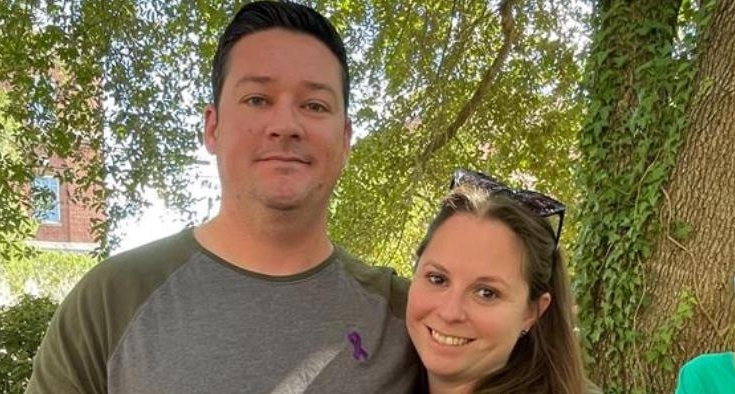
McGrady is a paramedic in Wilmington, North Carolina. His wife, Molly McGrady, is a sexual assault nurse examiner (SANE) at Novant Health New Hanover Regional Medical Center who works on Denise Riccobon’s team. (We introduced Healthy Headlines readers to Riccobon, the SANE coordinator in Novant Health’s Coastal region, in August 2025.)
Molly told her husband about the prevalence of domestic violence in their community, which played a part in McGrady going into paramedicine.
“Because Wilmington is a port city, we have a lot of sexual assaults,” he said. “People are kidnapped and brought here for sex work. Since it’s prevalent here, more of us need to address it and draw attention to it.”
Emergency care that you can rely on.
From combat medic to community paramedic
McGrady had been working as a medical assistant at the Novant Health Heart & Vascular Institute in Wilmington but, he said, he “missed the excitement of being a medic.”
That’s not to say he’s an adrenaline addict. His speech and demeanor are calm and measured. They have to be.
“If you’re calling 911, that’s already one of the most stressful points of your life,” he said. “I can't meet that energy with equal energy. We have to maintain a level head and assure victims that they’re safe and in the care of someone who’s going to stay calm.”
McGrady did five tours as a combat medic, and it takes a lot for him to get stressed out.
“I stay pretty calm in these scenarios,” he said. “If you don’t, your patient will pick up on that. Once a paramedic arrives on the scene, we’re supposed to be that rock for the survivor.”
Remaining composed doesn’t just help keep a survivor calm, it helps keep her safe.
“If you have your adrenaline going and you’re panicking, mistakes can get made,” he said. “People's lives are in your hands. Mistakes cannot get made.”
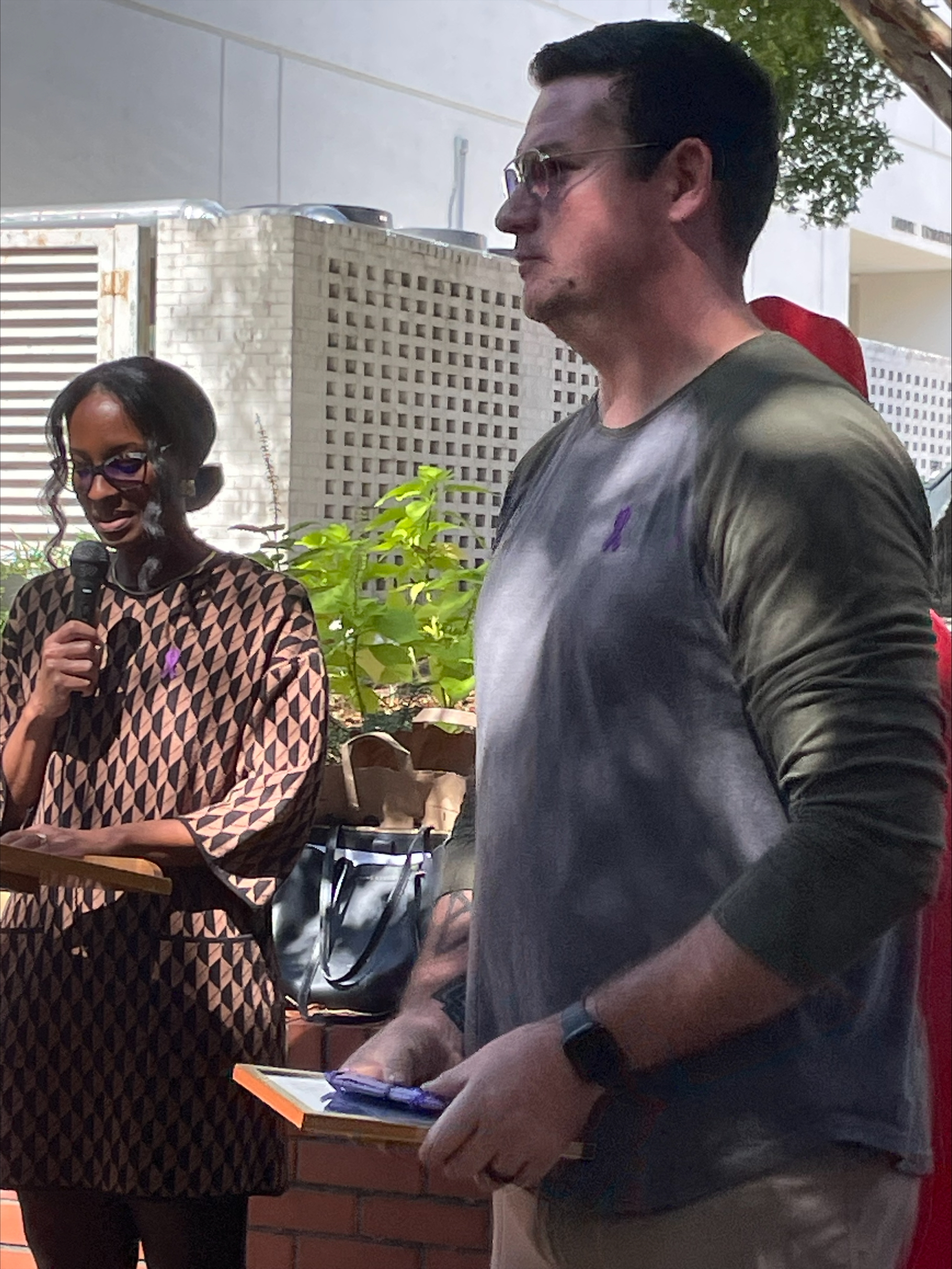
McGrady’s professionalism, calm-under-pressure approach and his interest in going above and beyond to help survivors led Riccobon to nominate him for the 2025 IMPACT award from Wilmington’s Domestic Violence Shelter and Services.
Riccobon said one way McGrady excels as a community paramedic is by always explaining New Hanover Regional Medical Center’s forensic nursing resources to those who need them.
“Tanner does his best to ensure that survivors of violence in our community have access and contact information for advocacy and support,” she said.
The nomination was a surprise to McGrady, as was his status as a finalist. “I didn't expect to win,” he said after learning that another deserving nominee received that honor. “What I do is minimal compared to what some other people do. The winners essentially run domestic shelters and give hundreds of volunteer hours. They do so much good work. As you can imagine, there aren’t a lot of males involved with this.”
An anomaly
As many as one in four American women, as compared to one in nine men, will be victims of domestic violence during their lifetime. McGrady is an outlier because he’s a man with a passion for helping the (mostly female) survivors.
He thinks there’s lots of room for improvement in training and protocols for helping victims in sensitive situations.
“Sometimes when we get called, we’ll send a single medic who asks the victim, ‘Do you want to go to the hospital?’” he said. “And if the answer is no, that’s where it ends. Paramedics need more training so that ‘no’ isn’t the end. If the woman doesn’t want to go to the hospital, a medic could offer to have someone contact her.”
Indeed, some victims of violent crimes decline going to the hospital because, in part, they worry about being retraumatized.
McGrady thinks paramedics need additional training from Riccobon to help them “be more mindful and educated about signs and signals to look for.” And he wants to pilot a program to deliver that training to them.
“It feels like there's a missed opportunity in getting people the proper resources,” he added. “In paramedicine, generally we get three days of training in assault and violence. I don't think that's enough.”
McGrady and another paramedic on his team, Zach Sharpe, have been trained by Riccobon. And he’s been informally sharing what he knows with his colleagues. One of the most important things they can do, he tells them, is to alert the charge nurse at the hospital if they suspect partner assault.
McGrady understands that women may not want to share their story, especially in the immediate aftermath of an assault, with any man — not even a trained paramedic who’s there to help. He doesn’t force them to.
“I'm 6 feet, 3 inches and 240 pounds,” he said. “I'm a big guy. I understand when women aren’t very open to speaking to me. The way I approach it is to say something like: You don't have to tell me anything. But if you go to the hospital with me, you can speak to one of our SANE nurses. They’re trained in exactly this area. There are people you can trust who will help you.”
Medical intervention is crucial
If a victim has been strangled, McGrady is even more intent on ensuring the woman understands how important it is to seek medical help.
“With strangulation cases, you might not have any symptoms for the first day or two, except for a bit of a raspy voice,” he explained. “But on day three or four, your airway might completely swell up, making it difficult to breathe.”
A nonfatal strangulation survivor can have serious adverse effects long after the incident, including carotid dissection, pulmonary edema, stroke and severe damage to the cardiorespiratory system, head, eyes, ears, nose and throat.
If someone agrees to go to the hospital, she can be given drugs to combat swelling and — importantly —monitored to ensure any swelling is managed.
That’s important for paramedics to know so they can educate victims. Something else survivors need to know: One episode of strangulation is likely to lead to more violence. Victims who experience non-fatal strangulation by an intimate partner are 750% more likely to be murdered by that aggressor.
McGrady is impatient to educate others. And not just the paramedics on his team. Once he and Riccobon get approval for the training and launch it, he hopes that’s just the beginning. He’d like to see paramedics across the country trained in dealing sensitively and effectively with domestic violence.
It’s not just paramedics who are in a position to help. McGrady believes everyone has a role to play in stopping violence and supporting victims of domestic violence. And he wants males, in particular, to get involved. He has this message to his fellow men: “If you’re not part of the solution, you’re problematic.”
But really, “anyone can help,” he said. “You can volunteer at a shelter. Just talking about it helps. And check on your friends. You may be very close friends with someone who could be going through domestic problems that go unreported because no one asks. Ask your friends: ‘Are you OK?’”