

As a Charlotte firefighter, Chris Strickland was used to running toward an emergency — until his own child was in trouble.
It was 2014, and Chris’s daughter Ellie was in her crib, convulsing.
For a minute, “all of my skills and knowledge went out the window,” Chris said.
Then muscle memory kicked in. Chris put Ellie in the recovery position as his wife Kristen called 911.
An ambulance transported Ellie to the emergency room, where the episode was labeled a febrile seizure — a type of seizure that happens in kids during a febrile illness — since she had cold symptoms.
But a month later, it happened again — and this time, Ellie didn’t have a cold.
After evaluation and neuroimaging, a pediatric neurologist diagnosed her with epilepsy.
Ellie was 2 years old.
More than half of children outgrow their epilepsy, but Ellie didn’t. She’s now 15, and her epilepsy has affected every aspect of her life.
Like when Ellie struggled in elementary school because of the cognitive impact of epilepsy.
“They would only give me so much time — it felt like only five minutes and the teacher said, ‘All right, you're done,’ and I only got half of the page done,” Ellie said. “And I was crying, and all the kids had already done their sheets, and I was like, ‘Why is this happening?’”
Or when other kids treated her differently.
“They would leave me behind in the dust,” Ellie said. “It would just be me walking by myself, and I didn't like that.”
Or when she went to voice lessons, sat down to watch a movie, began eating dinner, or did any number of normal activities — felt a familiar feeling — then woke up surrounded by medical professionals.
“All I know is that I’m in a hospital,” Ellie said. “I can’t really remember what’s happened.”
Complete neurological care for your child.
Epilepsy: ‘It sucks’
Although Ellie finds joy in many things, including nature, music, art, and her four cats and black lab dog Raven, there’s no sugarcoating how she feels about epilepsy: “It sucks.”
And it’s taken a toll on Chris and Kristen, who are constantly prepared for an emergency — though the couple have their seizure response mastered now.
In addition to keeping track of symptoms, medication dosing windows and emergency seizure medication, the couple has also reshaped their lives to support Ellie’s learning needs through homeschooling. “I can go at my own pace and I don’t have to be rushed,” Ellie said. “There’s no kids laughing at me.”
There were a few years when Ellie’s seizures were under control, and for a year and half she was even able to stop taking anti-seizure medication. The family thought that maybe she had grown out of epilepsy, as many children do.
But in December 2024, Chris took Ellie to her first-ever concert, an hour and a half from their house in Waxhaw. Amidst the vocal stylings of Pentatonix, 13-year-old Ellie had a seizure — her first in two years. Although Chris was right there to help, navigating her out of the crowd was difficult, and Ellie was crushed that she missed the show.
After that, she began having seizures weekly, then twice weekly.
Some days, she had a funny feeling that felt like an early part of a seizure (she’d later learn that this was called an “aura”). Other days, she’d have a full seizure with convulsions that required another trip to the emergency room.
She tried one, then two anti-seizure medications — but her seizures continued, even at maximum doses of the medications. And as her doses increased, so did the side effects, like slower processing and blurry vision — which “just ticks me off,” Ellie said.
Soon, she was having so many seizures that she had to give up activities she loved, like voice lessons.
If a patient has tried two or more appropriate anti-seizure medicines and is still having seizures — called “drug-resistant epilepsy” — they should see a neurologist who specializes in epilepsy called an epileptologist.
So in February 2025, Ellie was referred to pediatric neurologist and epileptologist Dr. M. Ehsaan Shahnawaz of Novant Health Pediatric Neurology and Sleep - Randolph in Charlotte.
A new understanding — and a new option
Understanding how a seizure starts, progresses and ends is important in classifying and treating the type of epilepsy a patient has.
Neuroimaging only shows part of the picture — and only a single moment in time. The patient’s seizure history is also important, but “a 2-year-old can’t talk and tell you, ‘Hey, this is what I felt beforehand,’ or ‘Hey, this is what happens leading up to it,’” Shahnawaz said.
Ellie was a teenager now, though, and with Shahnawaz’s guidance she was able to map out her typical seizure course: an odd feeling in her stomach, then nausea, a “freezing” feeling, and then — she didn’t know. An accurate seizure history usually relies on witnesses, so Kristen and Chris filled in the rest: Ellie would look to the right, appear dazed, eventually go rigid and into convulsions, then enter a recovery period.
As a 2-year-old, Ellie had received a diagnosis of generalized epilepsy — suggesting that her seizures began in both hemispheres of the brain at the same time.
But Shahnawaz now suspected that she had focal epilepsy, when seizures begin in a specific part of the brain. These seizures start with an aura, then sometimes — but not always — progress to involve the entire brain. Some patients with drug-resistant focal epilepsy can benefit from surgery targeting the part of their brain causing the seizures.
So Shahnawaz looped in the full pediatric epilepsy team to better understand where Ellie’s seizures began and whether surgery could be an option for her.
Surgery: ‘Our last resort’

Updated neuroimaging showed that Ellie’s brain had abnormalities consistent with mesial temporal sclerosis — scarring around the deep part of the temporal lobe, a part of the brain important in learning and memory.
A neuropsychological evaluation of Ellie conducted by Dr. Jordynn Fraser showed that Ellie’s learning difficulties occurred in the same part of the brain.

When a patient’s condition is complex, Novant Health care team members from different backgrounds meet for what’s called a “multidisciplinary conference.” Ellie’s conference involved Shahwanaz, Fraser, other epileptologists, neuroradiologists and pediatric neurosurgeon Dr. Erin Kiehna.
Together, they decided that Ellie would be a good candidate for a minimally invasive laser ablation surgery to scar the abnormal part of the brain causing the seizures.
“That part of her brain is not helping her, and the only thing it's doing is causing seizures at this point,” Shahnawaz said. “If you can scar that area up or remove that part of the brain entirely, you're going to have improvements because now you're not dealing with an abnormal brain structure.”
Although brain surgery was scary, the growing number of seizures was scarier. Surgery “was kind of our last resort,” Kristen said. “We had done everything else.”
They trusted Shahnawaz and felt good about Kiehna, who had answered every question they raised. And after surgery, Kristen noticed one more detail that impressed her: Kiehna had painstakingly braided Ellie’s hair out of the way so none had to be shaved.
From her surgery in September 2025 until March 2026, Ellie only had one seizure, when she got sick with a viral infection. And on Christmas Day 2025, Ellie celebrated: Unlike the previous year, she had opened presents without a single seizure.
Disappointment. And resolve
There is currently no cure for epilepsy.
The goals of treatment are seizure freedom — having no seizures — and improving the patient’s quality of life.

By March 2026, Ellie had gone six months without a seizure. Her new neuroimaging looked clear, so it was “reasonable” to try weaning her off medication, Shahnawaz said, especially since Ellie hated the side effects of her medication.
She sailed through several dose decreases. Hope continued to build. And then, during a family vacation in Florida celebrating Chris’s retirement from the Charlotte Fire Department, Ellie had three seizures in one night.
This was Chris’s low point: “It literally felt like all the wind had been taken out of our sails,” he said. “I told Dr. Shahnawaz, ‘I feel like we’re back to the drawing board.’”
Shahnawaz didn’t.
He reminded the family that the goal is seizure freedom — not medication freedom — and that surgery is successful if seizures decrease and severe tonic-clonic seizures are eliminated.*
He sees plenty of victory in Ellie’s story: “After she had a breakthrough seizure, we got her back on a dose of a medication — but on a lower dose,” Shahnawaz said. “So now she’s dealing with fewer side effects, and it's still controlling her seizures.”
Even if she has an occasional seizure, a person who has a seizure every six months can achieve a much higher level of independence than a person who’s having them every other day, Shahnawaz said. “Now she’s able to live her life a bit more fully.”
And while Ellie wishes she could be completely off medication, at least she’s taking two fewer pills each day of the medication with the most disruptive side effects.
“At this point, we’ll take it,” Kristen said.
Making progress
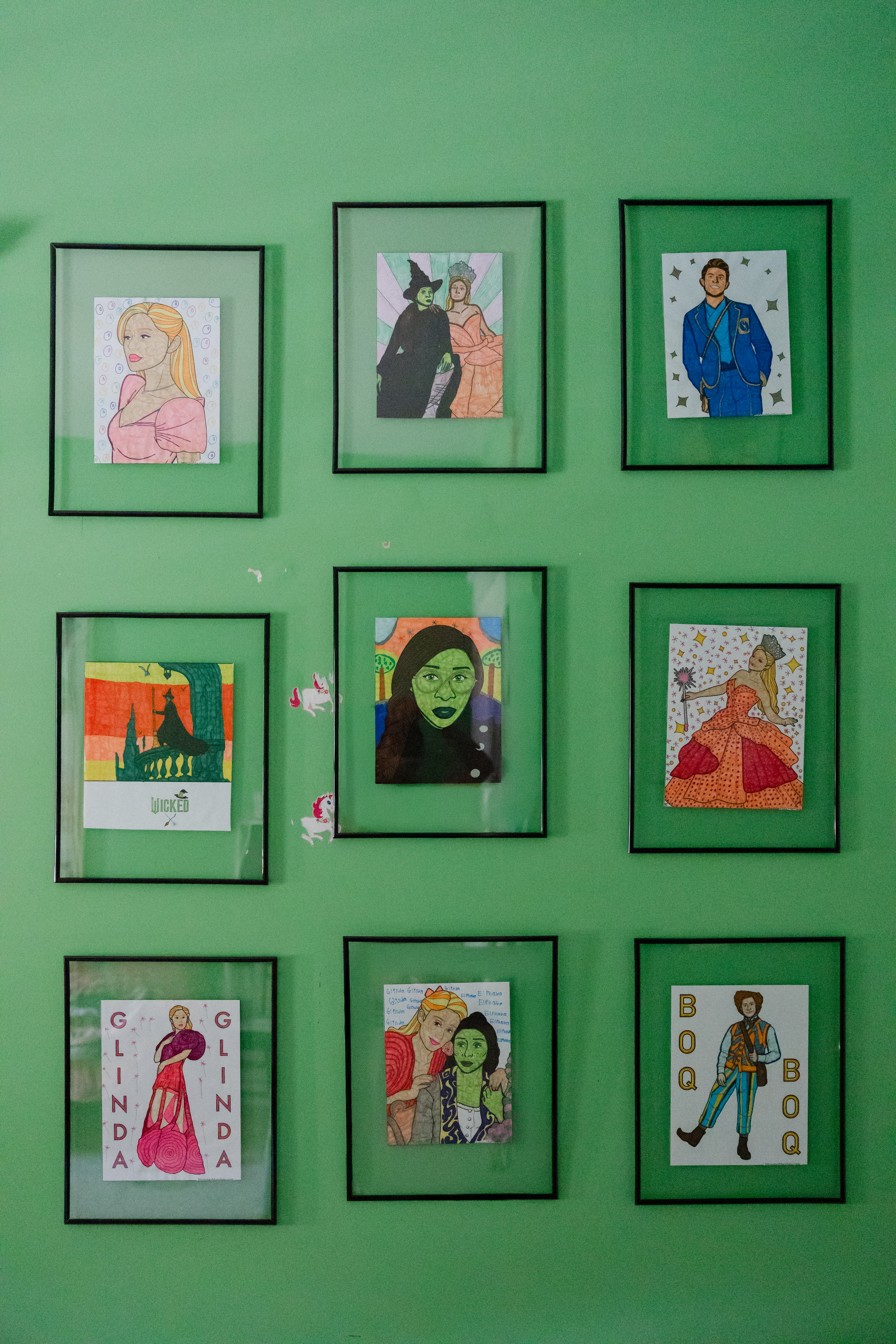
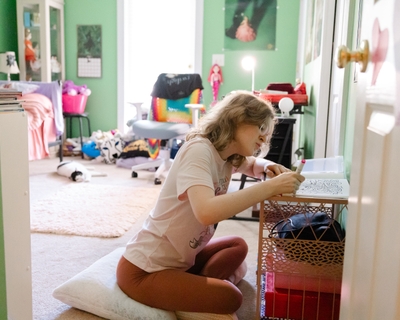
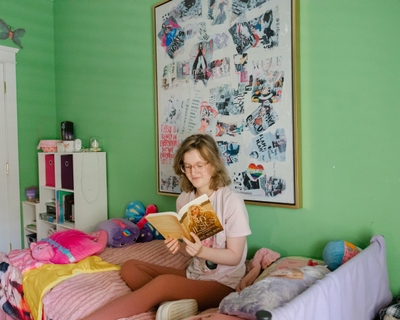
These days, Ellie’s enjoying making art of all kinds.
Learning still requires a lot of effort and repetition, but the family has noticed improvements since her surgery. She’s persevering through math, and recently celebrated her 15th birthday with a family party full of details she planned herself.
In the future, she hopes to meet a famous person, become a singer or artist, and make a new friend. But her main goal? “I don’t want to have any seizures anymore,” Ellie said. “I’d rather hang out with my cats.”
Her epileptologist agrees: “I really hope that she remains seizure-free and she's able to continue to achieve all those goals and dreams that she has,” Shahnawaz said.
In May 2026, shortly after our interview, Ellie had multiple seizures in one night. Once again, Chris and Kristen knew what to do — and where to find the help Ellie needed (the emergency room at Novant Health Hemby Children’s Hospital). Although Ellie’s story isn’t wrapped up in a bow, the family’s pressing on anyway. Ellie “is 100% a role model for acceptance during the ups and downs of life that happen out of our control,” Kristen said.
As a parent, Kristen struggles with “the absolute helplessness — the feeling of wanting to, but not being able to take this away from Ellie,” she said. But “even in the dark times, we still have hope. If we give that up, what good does that do for Ellie?”
And she marvels at her daughter’s resilience — her daughter who has had a diagnosis since she was 2, who barely remembers life without medication and side effects, who’s faced learning and social and medical challenges and has kept going anyway.
It’s the reason Kristen has wildflowers tattooed on her arm: “They remind me of her journey,” Kristen said, describing a field of wildflowers that even the fiercest wind and rain can’t knock over. “Storms come, and wildflowers withstand so much and remain so beautiful.”
Her hope for Ellie? “That you would continue to carry this ability of resiliency — that you would know how special you are, how much you have overcome, and that you are very capable of a lot,” Kristen said. “You’re an overcomer and you’re a warrior — so keep going. You got this.”
* Tonic-clonic seizures are the most dangerous type of seizure and the biggest risk factor for sudden unexplained death in epilepsy, or SUDEP. Patients with focal epilepsy can progress from a focal seizure to a tonic-clonic seizure involving loss of consciousness, falling to the ground, impaired breathing, and jerking. Thanks to Ellie’s surgery, she is at lower risk for tonic-clonic seizures.
If you have drug-resistant epilepsy, you have options beyond ‘living with it.’
Pediatric neurologist and epileptologist Dr. M. Ehsaan Shahnawaz of Novant Health Pediatric Neurology and Sleep - Randolph in Charlotte wants patients with drug-resistant epilepsy to know: They have options.
“Nationally, drug-resistant epilepsy patients are often just told to tolerate it or to live with it,” Shahnawaz said. “Epilepsy patients need to be aware that there are other treatment options, just like we offered Ellie.”
If you or your child has drug-resistant epilepsy, struggle with side effects from anti-seizure medication, or have additional developmental concerns, it’s time to visit a comprehensive epilepsy center accredited by the National Association of Epilepsy Centers (NAEC). NAEC accreditation shows that the center has met the highest standards of care for epilepsy, with expert providers and comprehensive care.
Novant Health has three NAEC-accredited comprehensive epilepsy centers:
Novant Health Forsyth Medical Center in Winston-Salem, a NAEC Level 3 epilepsy center for adults.
Novant Health New Hanover Regional Medical Center in Wilmington, N.C., a NAEC Level 3 epilepsy center for adults and children.
Novant Health Presbyterian Medical Center in Charlotte, a NAEC Level 4 epilepsy center that serves both adults and children at Novant Health Hemby Children's Hospital. The pediatric epilepsy center, directed by Shahnawaz (Ellie’s doctor) is one of only four NAEC Level 4 pediatric epilepsy centers in North Carolina.


